Showing posts with label art. Show all posts

5.26.2010

UPSIDE DOWN

It was already during his studies at the Royal College of Arts that the London designer, Khashayar Naimanan, designed the Hidden Wealth service for Nymphenburg – a service which turns the conventions of porcelain painting on their head: Nymphenburg's mark is located on the top of the simple service with the complex paintings of Nymphenburg's designs being hidden underneath. Naimanan selected two floral patterns for HIDDEN WEALTH: one from the rococo period with naturalistic sometimes stylised blossoms in warm brilliant colours and leaves made from 24-carat gold as well as a classical empire design with a gilded vine that was originally used to adorn a tea service. Experts must usually check the marks on the bottom of porcelain pieces. But this design makes the actual value of the pieces immediately apparent on first inspection. While the splendour beneath the plain appearance of the mark remains concealed to cursory glances.
While I'm not crazy about the idea of plastering a logo on the TOP of a dish (yuck?), the painted undersides are genius, as is this lucite/mirrored dining contraption they obviously necessitate. I have a mirrored desk top with more brick-a-brack on it than Princess Margaret's had, and I often marvel at the undersides of the dishes and ephemera sitting on top of it.  It's a whole side of stuff you don't normally get to see.  It'd make for a novel dining experience,  at the very least...


Nymphenburg "Hidden Wealth" Service, by Khashayar Naimanan. Images via Nymphenburg and Stylepark in Residence.

2.28.2010

SHE SHOT MARILYN

Dorothy Podber (1932-2008): Warhol scene girl, performance artist, wild woman:


She was most famous for shooting Andy Warhol's Marilyns, literally.  In the forehead. With a pistol.  After which, she was instructed not to return to the Factory.  It's worth noting that the "shot" Marilyns are vauled higher than their unshot counterparts.

From the NY Times obituary:
Certainly the most outrageous [of her exploits] was her unsolicited contribution to a few of Warhol’s “Marilyn” silk-screen paintings. In the fall of 1964 Ms. Podber, a friend of the photographer and Warhol regular Billy Name, visited Warhol’s Factory on East 47th Street in Manhattan with her Great Dane (named Carmen Miranda or Yvonne De Carlo, depending on the account). Ms. Podber asked Warhol if she could shoot a stack of the “Marilyn” paintings; he apparently thought that she wanted to take pictures of them and consented.

But she produced a pistol and fired at them, penetrating three or four. One of them, “Shot Red Marilyn,” with a repaired bullet hole over the left eyebrow, sold for $4 million in 1989, at the time setting a record at auction for a Warhol work.

“After she left,” Mr. Name told Ms. Bergmann, “Andy came over to me and said: ‘Please make sure Dorothy doesn’t come over here anymore. She’s too scary.’ ”
Ms. Podber told Ms. Bergmann that when money was low, as it often was, she generally found unorthodox ways to make it. She once ran a service that dispatched maids to doctors’ offices, primarily as a way to get the keys to the doctors’ drug cabinets. “I never worked much,” she said.
From Joy Bergmann's article, at Sapid and Rapid:
During Dorothy and Ray [Johnson]’s ‘dead animal’ phase, they gave Heide a gift: a clock with no hands. “When you opened the face of the clock, out dropped a rat, spray-painted gold.”

Isabelle Fisher remembers Podber being held at the Women’s House of Detention on Sixth Avenue for running an illegal abortion referral service; according to Podber, an abortion was also performed in her apartment...
Another time Johnson invited a collector up to his Norfolk Street apartment for a viewing. Upon arrival, the space was completely bare, save for an armoire in the corner. Johnson reportedly said, “This is my work,” opened the cabinet and Podber jumped out, laughing weirdly.  
Madness embodied. Is it any wonder? She was known for the generously sized bowl of crystal meth she kept on her coffee table.

Best friends with Ray Johnson (see here).

Oh, and she kept a pet marguey.—you know, a type of ocelot.

1.24.2010

Cradle Robbing

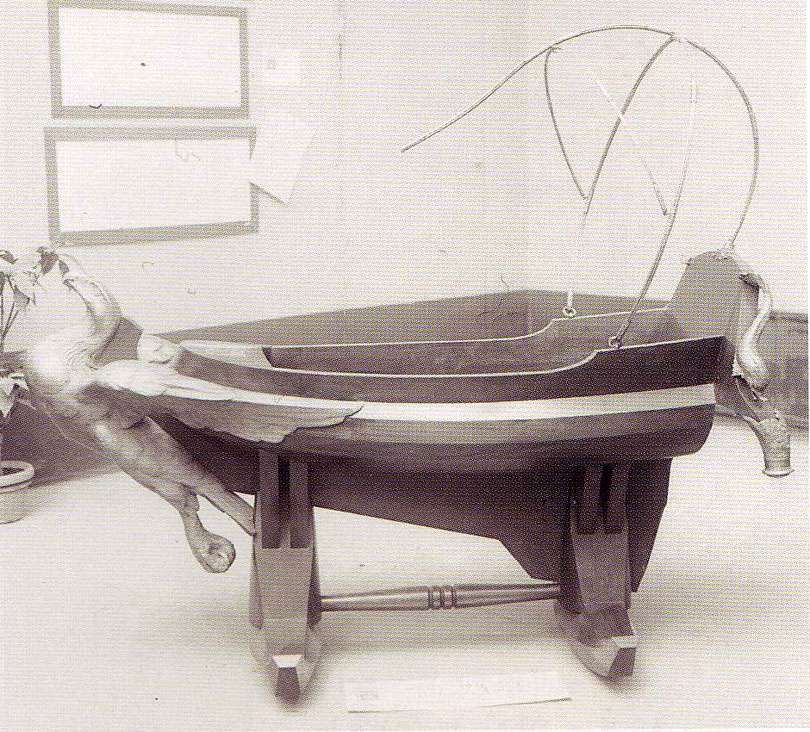
A cradle owned by dictator Benito Mussolini.

I have absolutely no use for a cradle. Can this be made in full size?

"Made for Il Duce's youngest son, it combines the theatrical gilded eagle prow (a sort of boat on legs) with the solidity of the best ninetheenth-century furniture, from a single block of wood. It must weigh a ton. Presumably the metal strut at the back was to stretch white linen over when Mussolini Junior was out in the sun."
-Peter York, in Dictator Style

1.13.2010

Couch Potato

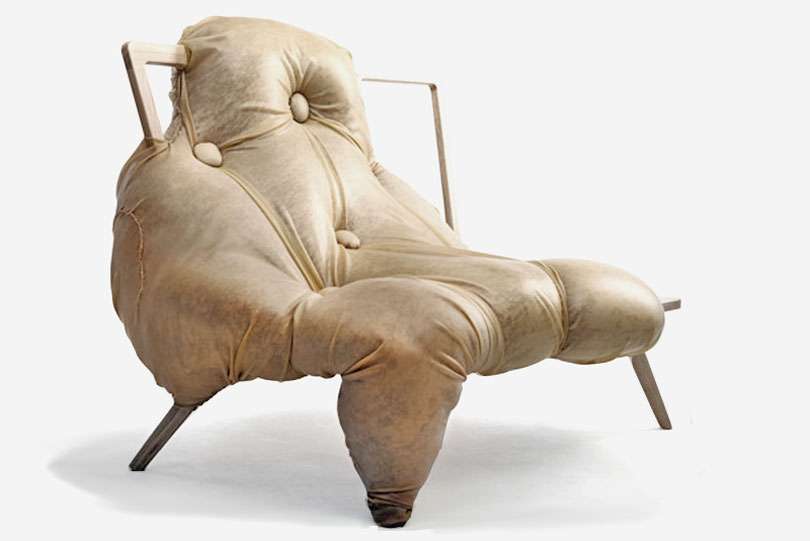
My first thought, when I ran across this obese chair by design student Charlotte Kingsnorth, was that it resembled artist Jenny Saville's paintings. Sure enough, it was indeed inspired by a series of her paintings, where the flesh of obese figures consumes the stools on which they perch.

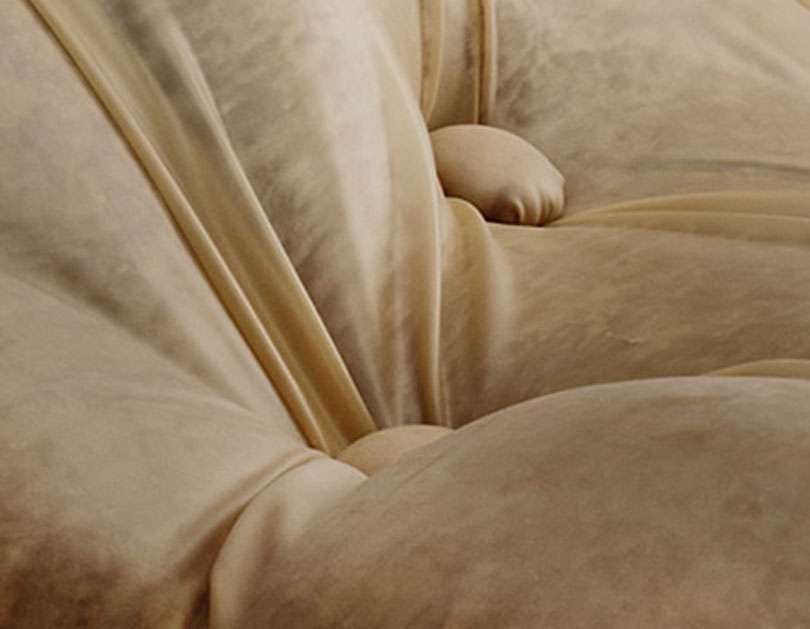
Personally, I'm captivated with Kingsnorth's use of material— the chair is upholstered in pink velvet and covered in latex sheeting, tufted in bulbous, irregular protrusions.   I've posted one of Saville's paintings just underneath, and you can really see how well the velvet/latex combo replicates the soft, mottled quality of Saville's paint. Viscerally disgusting? Yeah, definitely. But I'm intrigued. 


Above, At One by Charlotte Kingsnorth, 2009.

From a Dezeen article on the piece:
"At One is a sofa which has been devoured by its obese occupier,” says Kingsnorth. “It tells a story of a relationship between a person and their sofa and the evolution of their bond through time spent sitting together.
Above, detail of the latex-over-velvet upholstery

Above, Prop (1992) by Jenny Saville

1.08.2010

Bimbette

I save a ton of images.  They're everywhere, and I'm drowning in them— strewn about my room, in stacks, in folders, in books, on my computer, in my desk, under my bed, taking over my head and occupying valuable brain space...

Attempts at organization have been futile, but sifting through the collection has provided (at times, frightening) insight into the things that catch my attention.  Evidently, one of these things is UNAPOLOGETICALLY EXTREME FEMININITY.  Feel free to turn your head now if pastels and polka dots induce feelings of nausea.


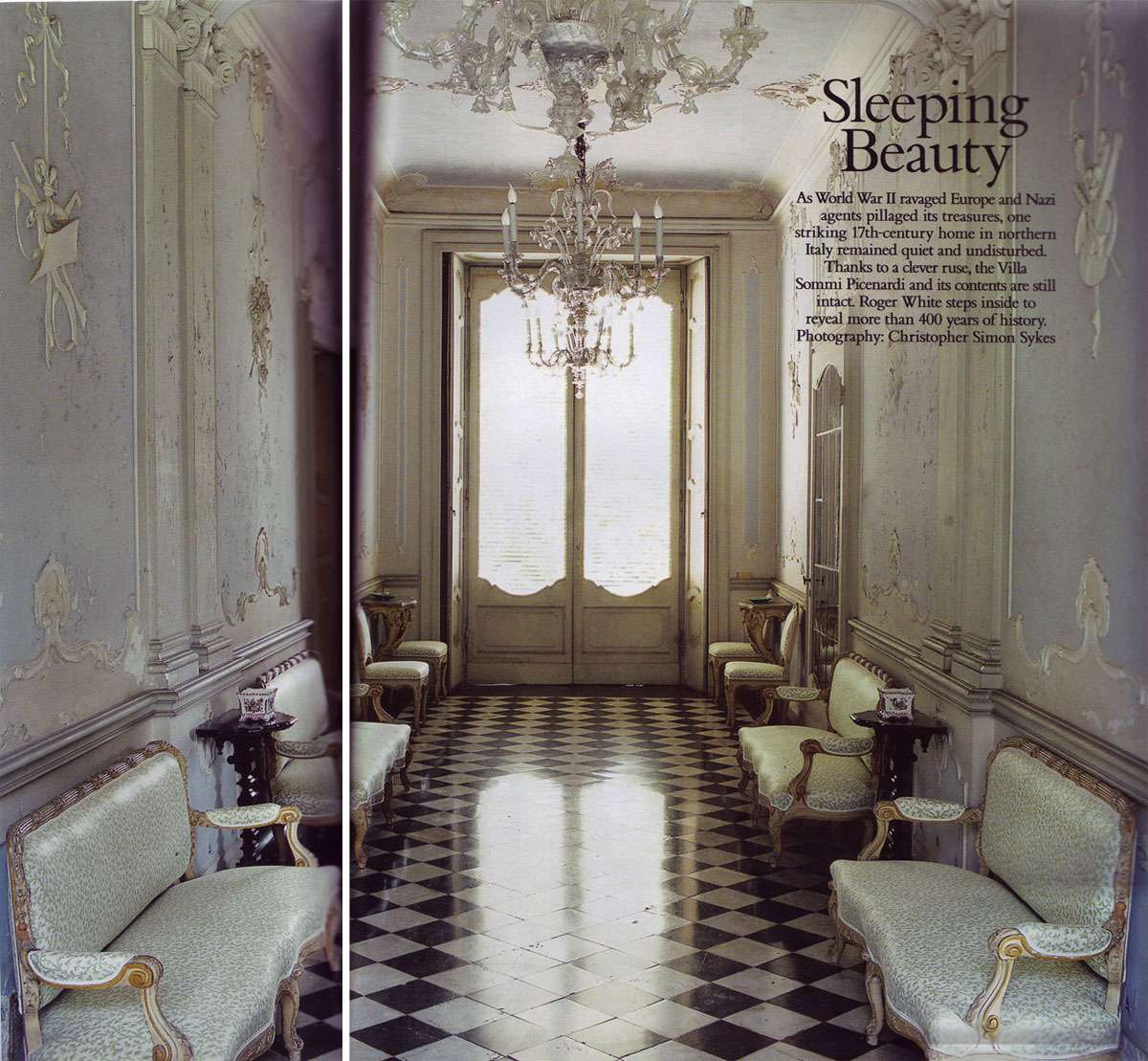
Above, Villa Sommi Picenardi. Photo: Christopher Simon Sykes. From World of Interiors, March 2009.

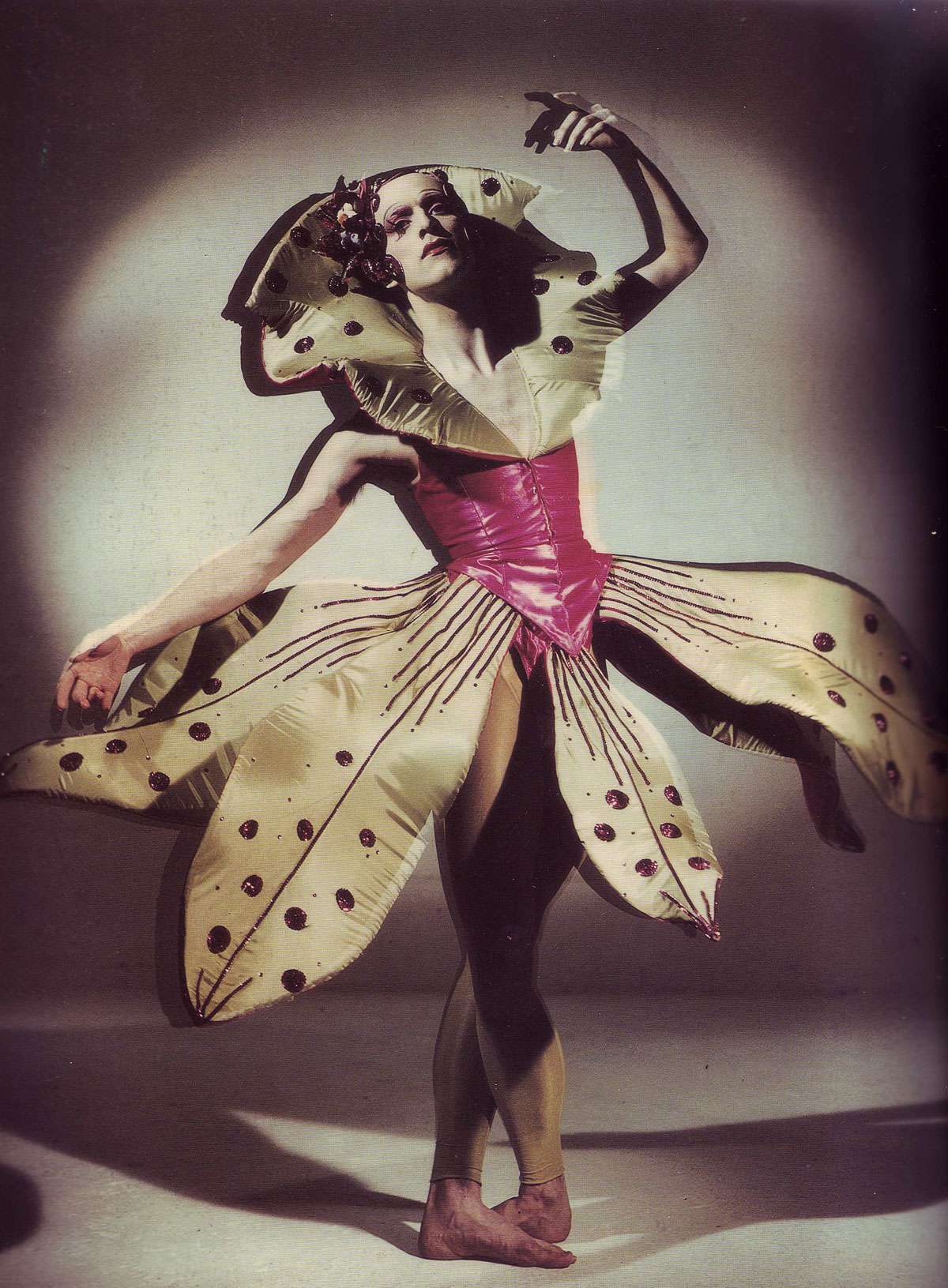
Above, 'Pearl', costume for the dancer Matthew Hawkins, late 1980s.  From Baroque Baroque, by Stephen Calloway.

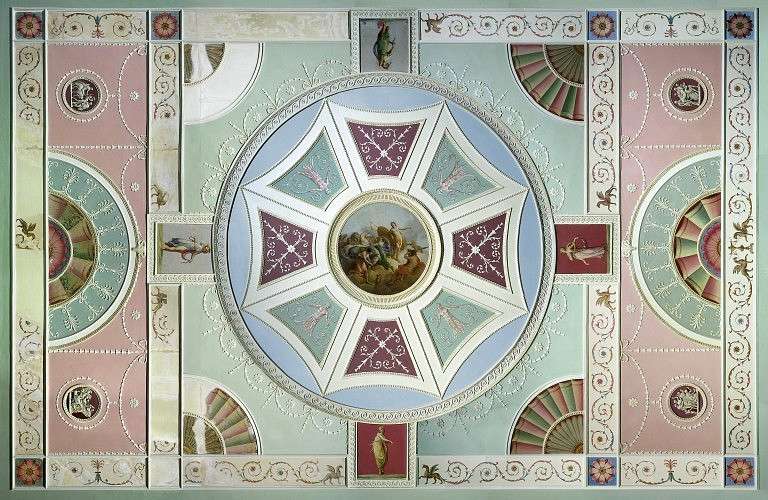
Above, ceiling by Robert Adam, painted by Antonio Zucchi, c. 1771. Via the Victoria & Albert Museum.

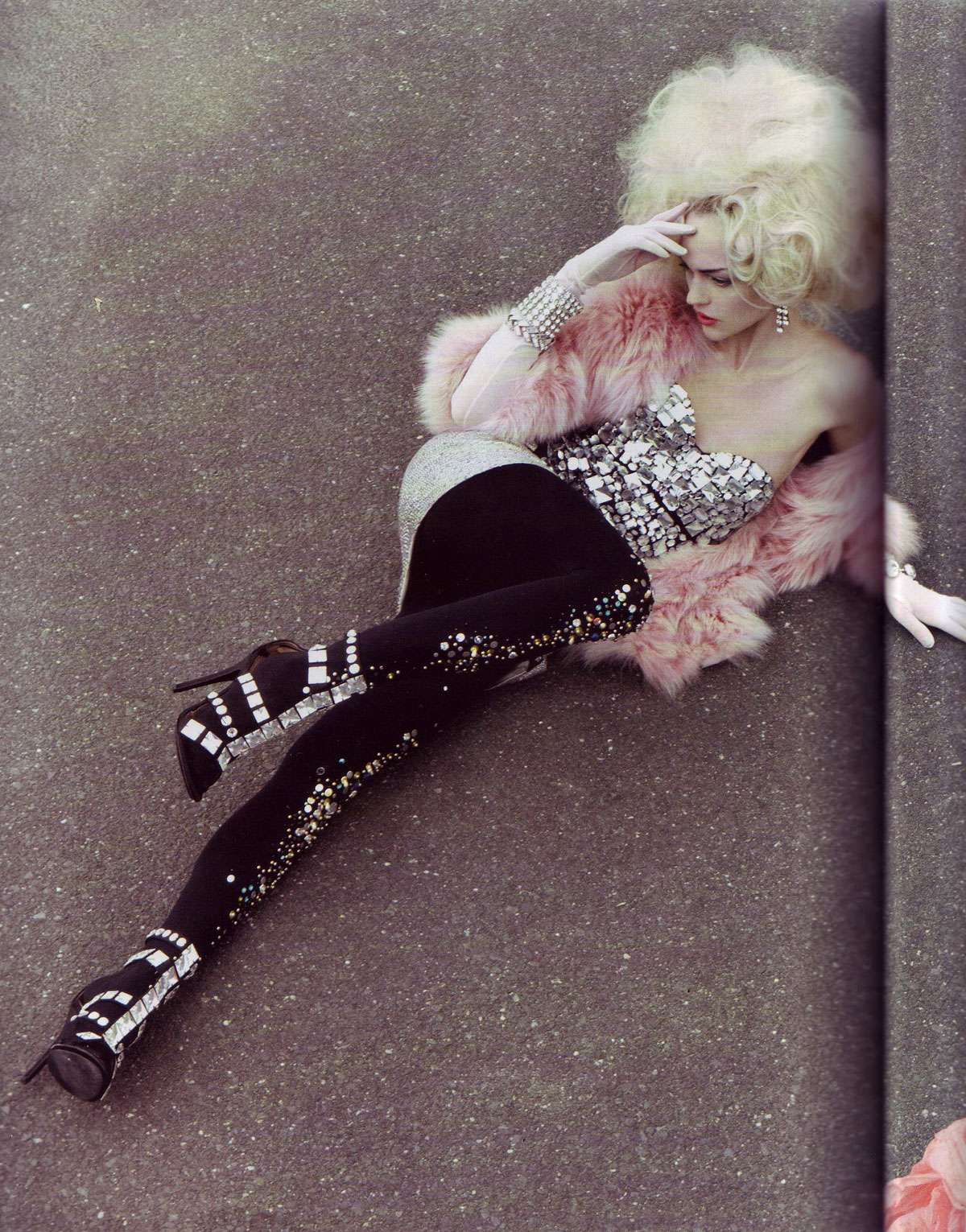
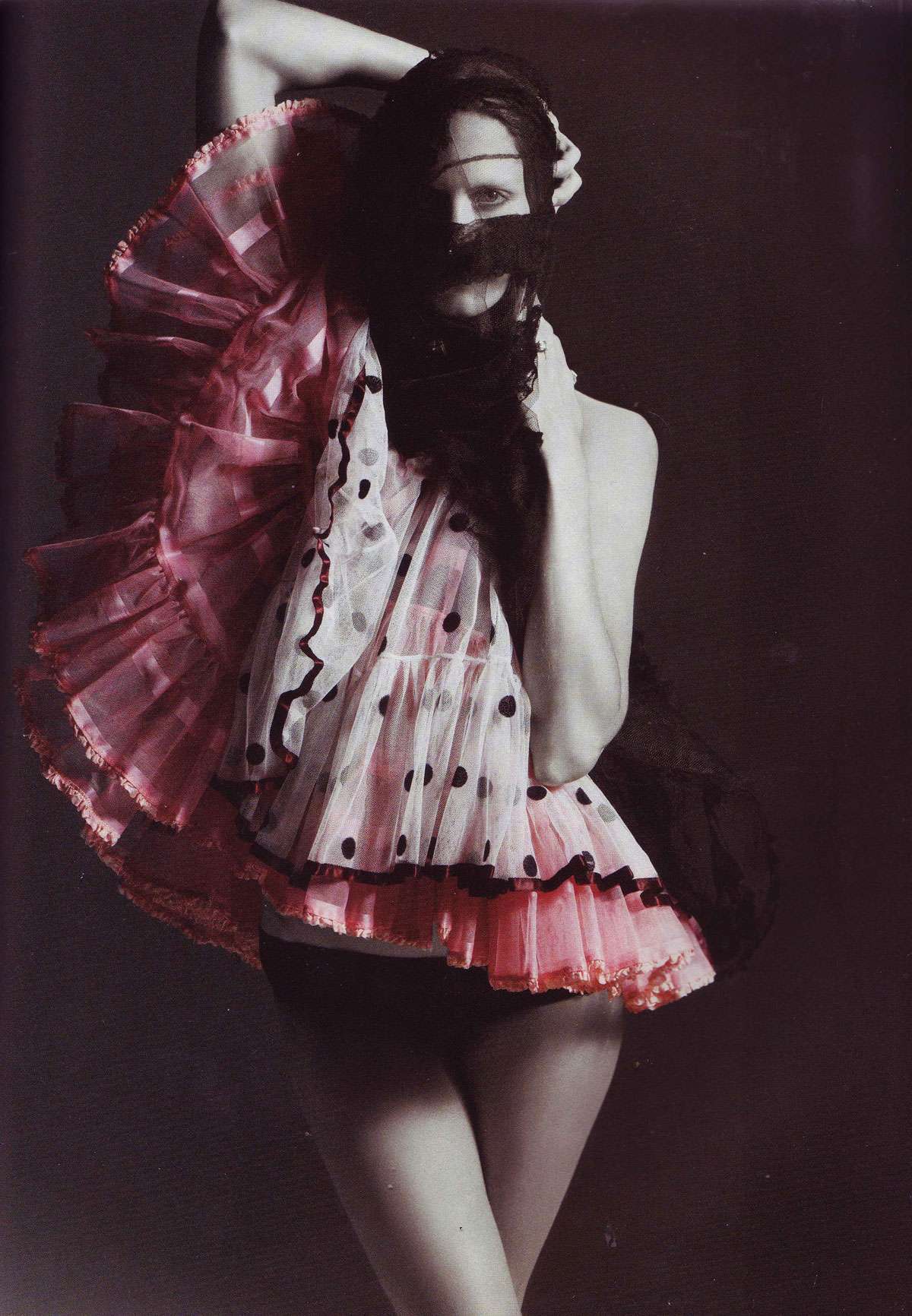
Above, from "It's a Matter of Glam" by Craig McDean, Vogue Italia, October 2009.

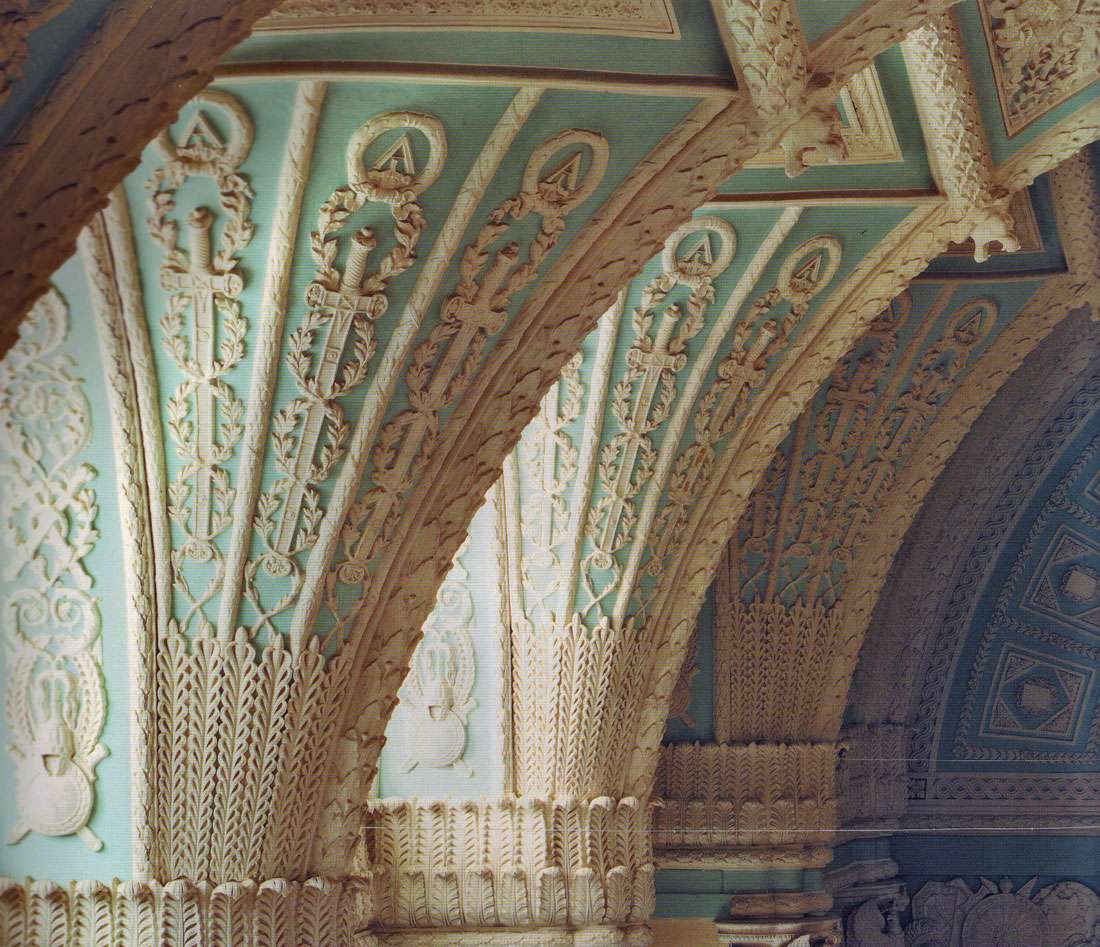
Above, The Alexander Hall, detail of the fan vaults.  Hermitage Museum (formerly the Winter Palace), St. Petersburg, Russia.  From The Hermitage: The History of the Building and Halls.
 
Above, Mme. Emile Straus, upon whom Proust's character Oriane, the Duchesse de Guermantes was based. Photograph by Paul Nader. From Art & Antiques, May 1984. 

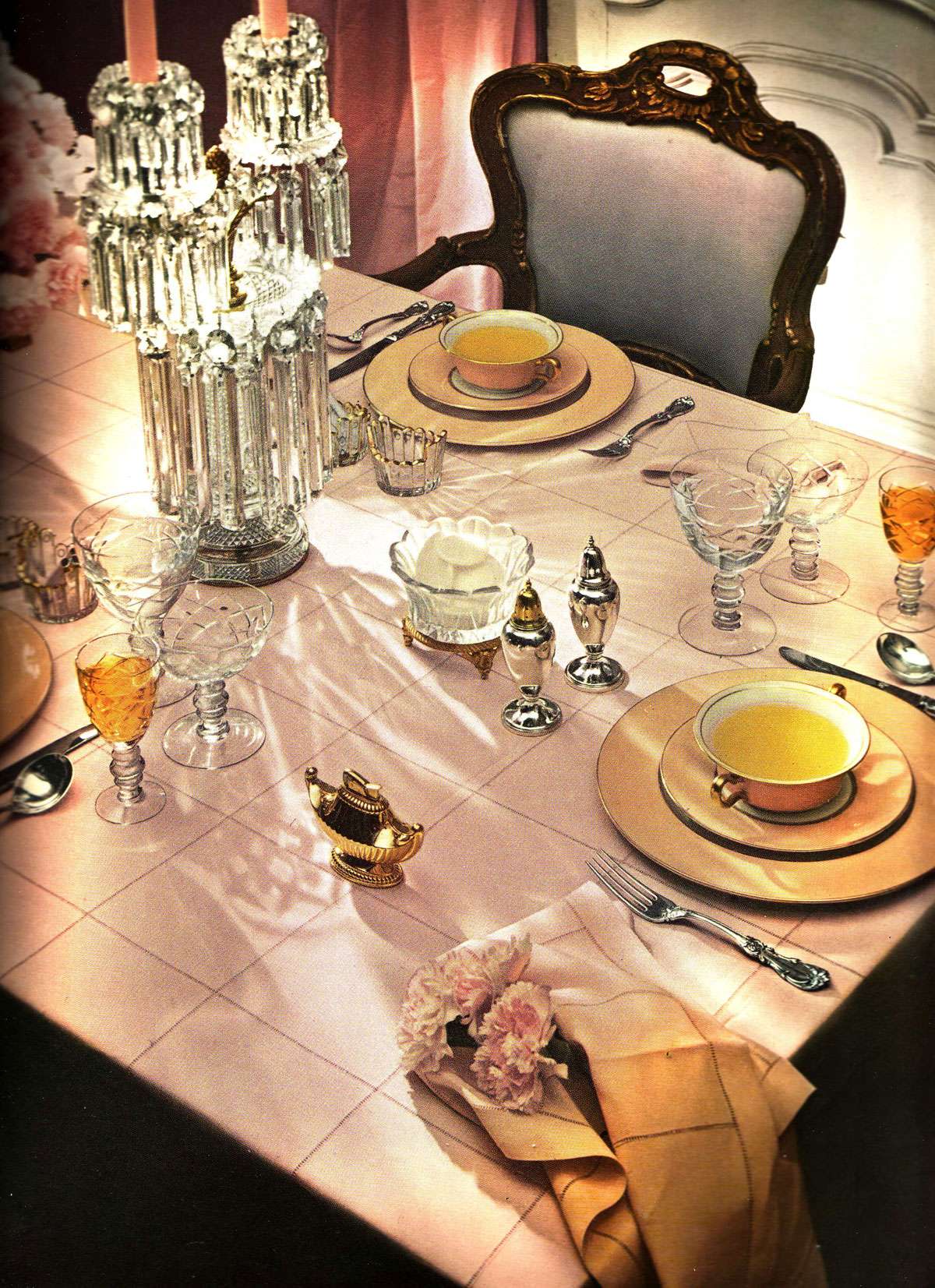
Above, "muted pinks make a pretty table." Photograph by Horst. From House & Garden's New Complete Guide to Interior Decoration, 1953.

Above, Chili Williams.  Photograph by Ewing Krainin, 1943. Reprinted in LIFE magazine, Fall 1986. 

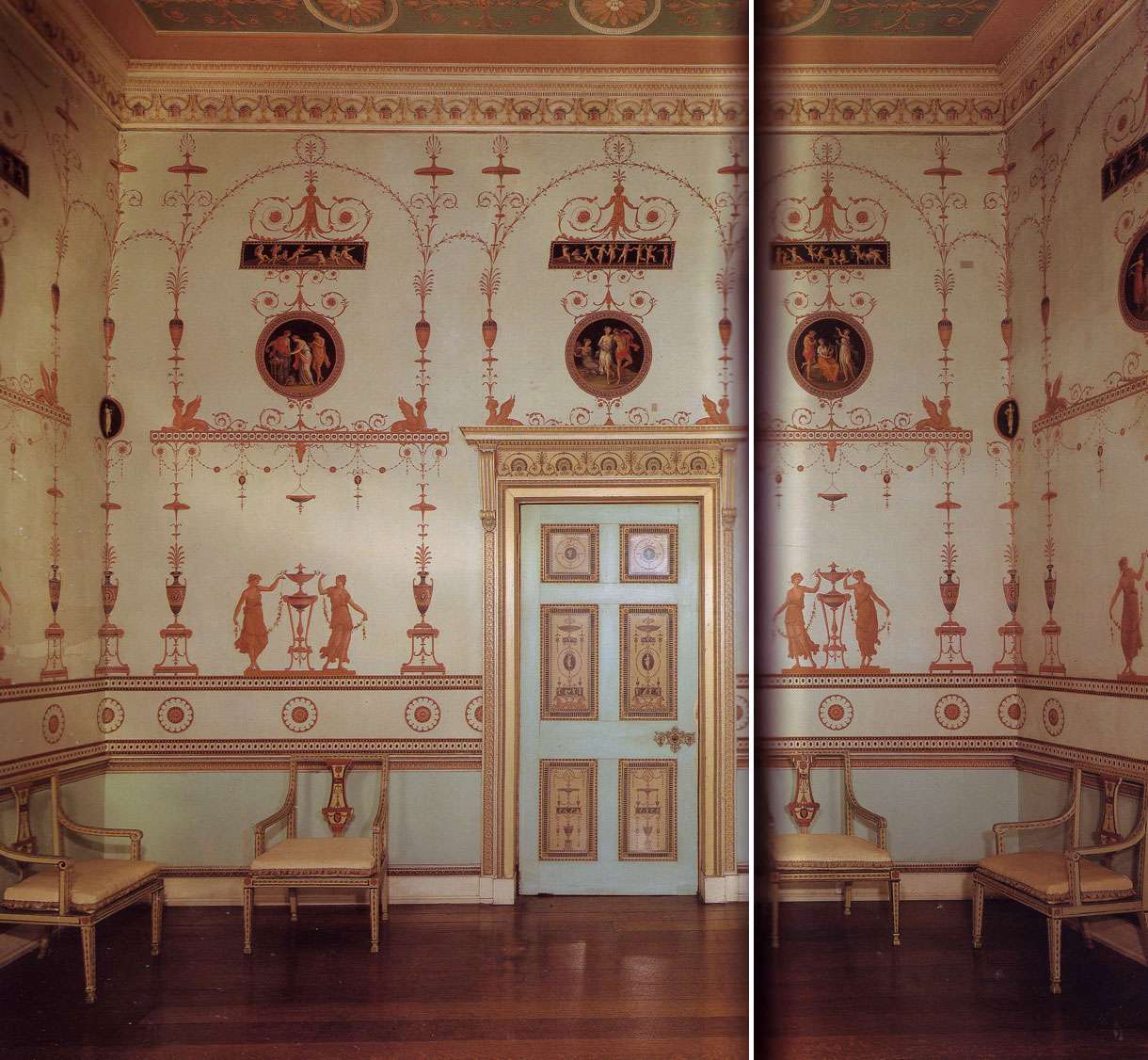
Above, Etruscan Room, Osterley Park, designed by Robert Adam, 1775-76. Victoria and Albert Museum, London. Scan from The Best of Painted Furniture.

Above, from "Last Vision" by Mario Sorrenti, Vogue Italia, December 2007.

12.23.2009

Moore Displays

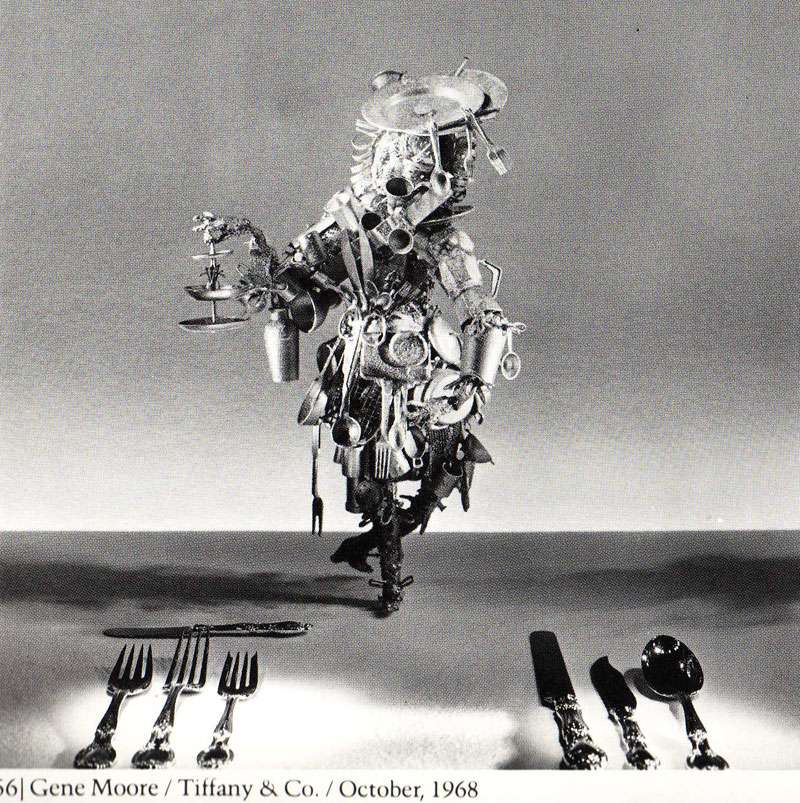
"In response to a question on the current use of realistic mannequins, he says, 'I don't think they are very realistic, because I never see people taking positions that mannequins take. I'm tired of seeing girls looking like they're spreading their legs to take a piss. It's dreadful. There's such a lack of elegance that I can't bear it.'" -Gene Moore, in Windows by Michael Emory

The window display artist Gene Moore (1910-1998) designed over 5,000 windows throughout his career as Tiffany's display director.  Although he was trained as a fine artist, he regarded his displays as a form of news reporting, a reflection of the times in which they were made, too disposable to be "real" art. I hope Mr. Moore was just being modest. Because I BEG TO DIFFER!

Wikipedia says that Moore lived in a United Nations Plaza apartment designed by Robert Denning (For whose designs I have an extreme affection.  See here and here.). Could it be true?

There's some Dali influence in the disembodied, floating arms, isn't there?

From Windows by Michael Emory

Whips and Motorcycles: Clarence House, 1969

Whips, motorcycles, and Clarence House fabrics...yes, please. Check out Gene Moore's killer window for Clarence House, September 1969. Who knew?


 From Windows by Michael Emory

Featherbed

I'd like to sleep here tonight.


From "Animal Obsession," Casa Vogue n. 32. Photo by Tim Walker.

11.03.2009

Artists' Studios

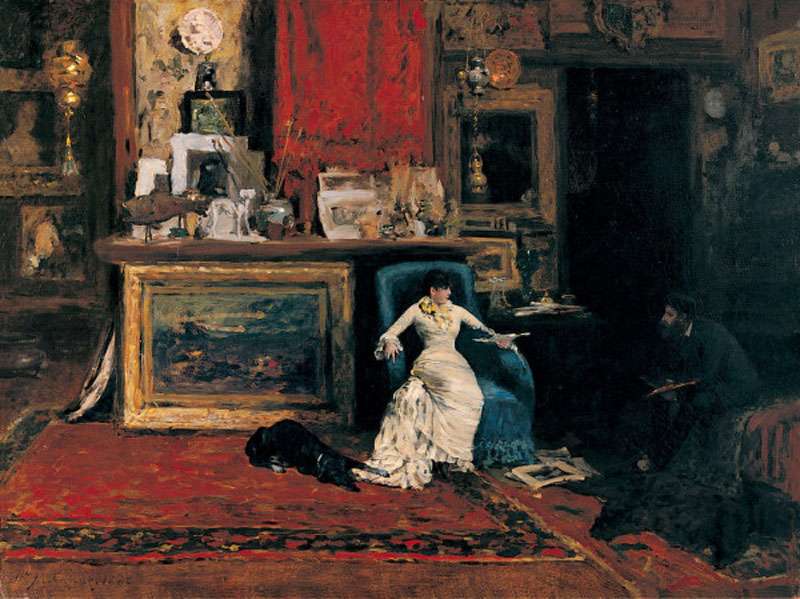
 William Merritt Chase (1846-1916)'s studio:


Above, The Tenth Street Studio, William Merritt Chase, c. 1880

Marcel Duchamp (1887-1968)'s studio:


John Singer Sargent (1856-1925) in his studio:


James McNeill Whistler(1834-1903), in his studio:

11.02.2009

Halloween's Over, But...

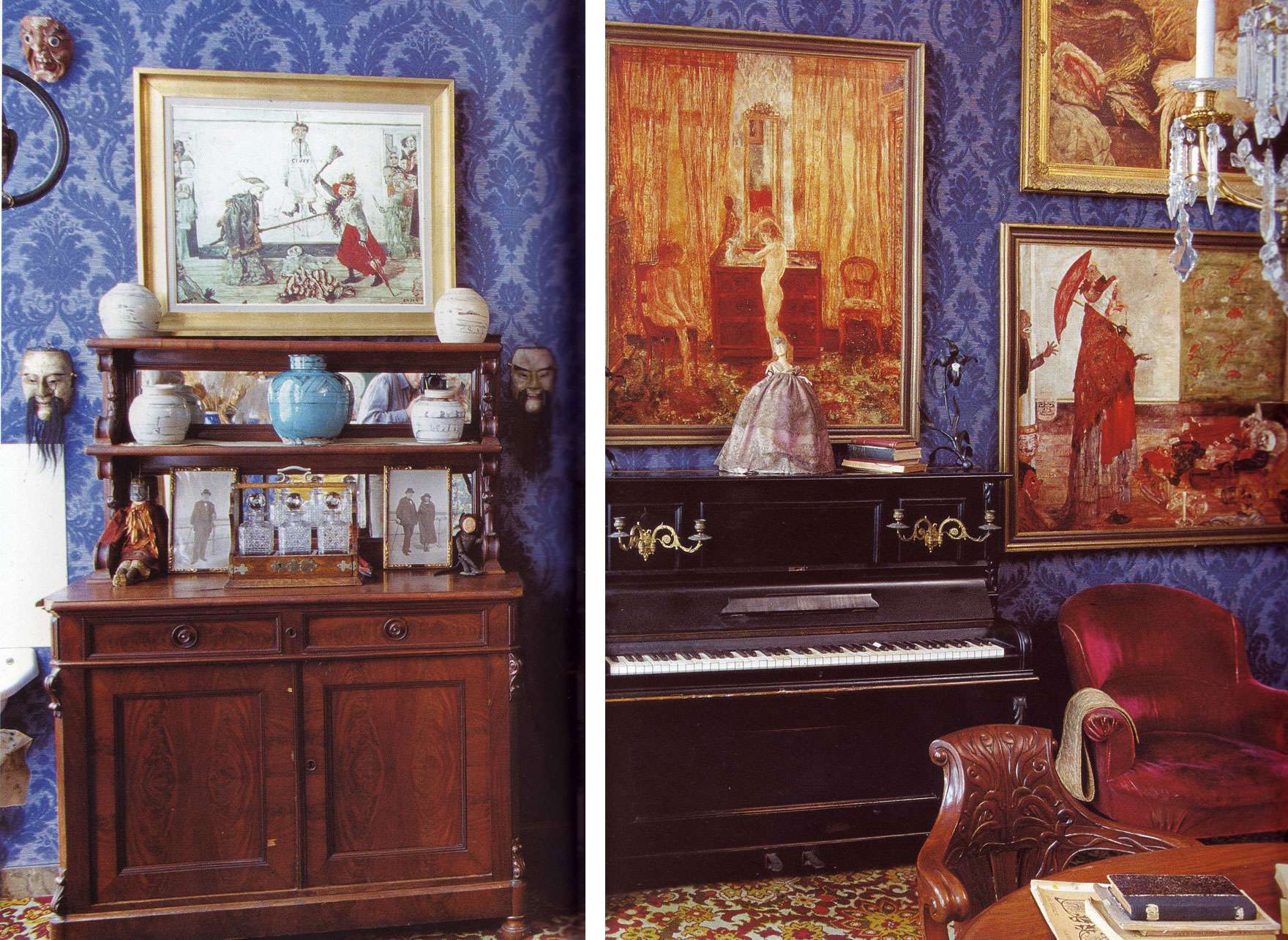
...some macabre things deserve to hang around all year.  Like the paintings of Belgian artist James Ensor (1860-1949) and his GLORIOUS apartment in Ostend.

Ensor took delight in macabre nightmarish fantasies, like the one he portrayed in The Banquet of the Starved. Guests sit around the Last-Supper style table, clad in grotesque masks and engaged in a variety of sinful activities, inspired by the German occupation of Belgium and accompanying period of starvation:


Above, The Banquet of the Starved, 1915.  The Metropolitan Museum of Art.


Above, La Vanité Dansante, 1945. Image via Michael Tollemache Fine Art

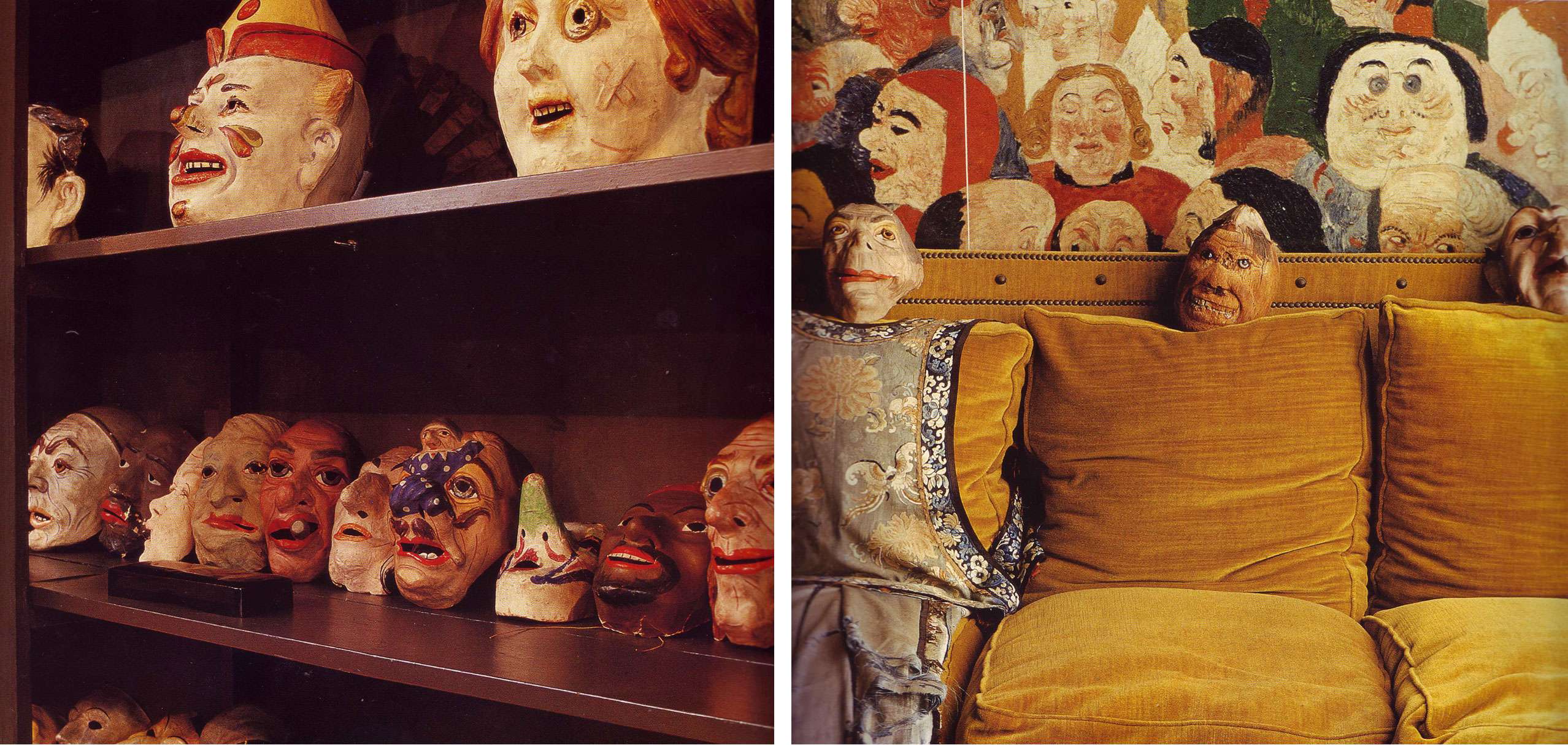
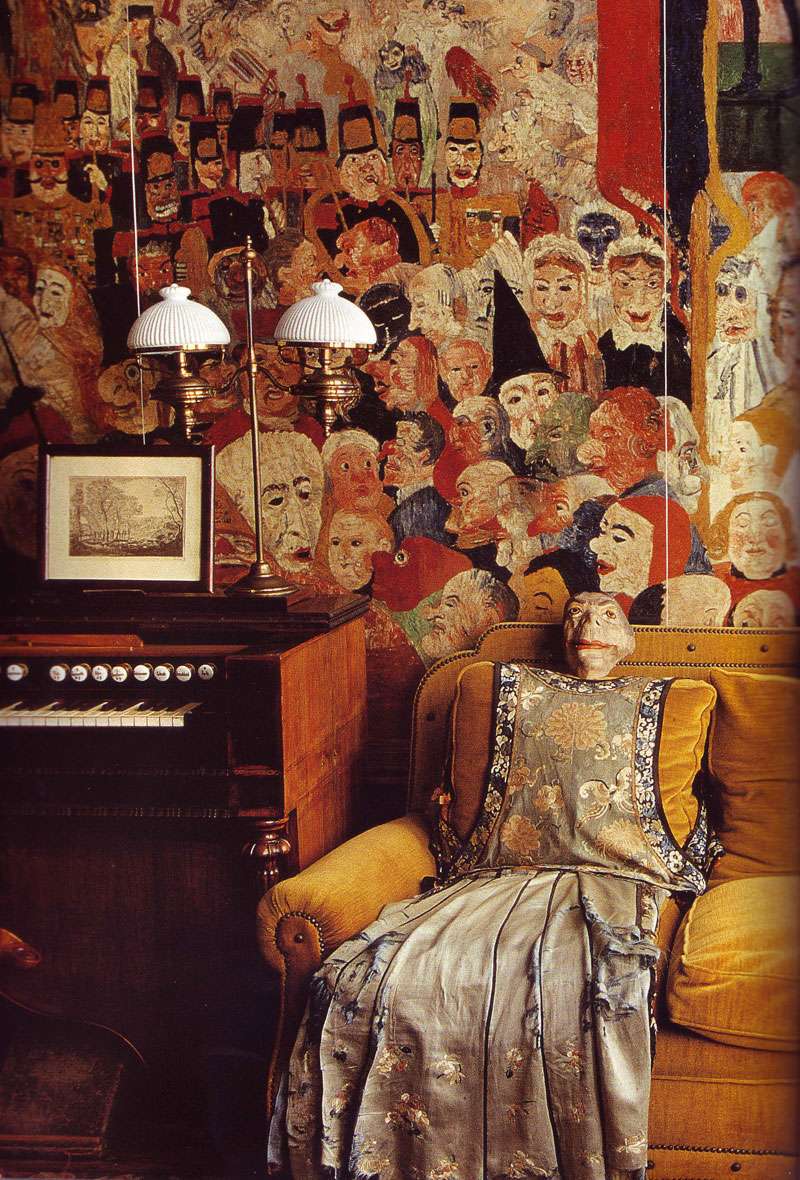
Ensor's family owned a curiosity shop (Ostend was a famed carnival resort-town), from which he drew much inspiration. (Look at all of the fantastic masks!) Of course, I'm apt to feel great affection towards anyone who dresses up their sofa and GIVES IT A HEAD.


Ensor's paintings are breathtaking within the context of his apartment. Interiors like this one make it obvious how deficient a gallery setting can be at times...

Below, an image of a shelf of masks from the souvenir shop.  From one of his letters: "I spent my childhood in my parents' shop, surrounded by strange creatures of the sea, by magnificent shells of pearly iridescence, and by the bizarre skeletons of sea monsters and marine plants."

Late in life, Ensor reminisced about the shop and its influence on him:
In my parents' shop I saw the undulating lines and sinuous shapes of beautiful shells, the iridescent gleam of mother-of-pearl and the rich tones of fine chinoiserie, and above all the sea, vast and constant, made a profound impression upon me.
Artists' Houses, by Gérard-Georges Lemaire


Scans and quotes from Artists' Houses by Gérard-Georges Lemaire, Photographs by Jean-Claude Amiel, 2005.

10.28.2009

A Person + A Place: Rudolf Nureyev

Has anyone seen the film Valentino (1977) with Rudolf Nureyev?  Watching it reminded me just how much I love Nureyev (1938-1993).  If you haven't, TRACK IT DOWN.  The tango scene with Nijinsky alone makes it worthwhile (most riveting tango between two men, ever),

Powerful dancer, impossibly gorgeous person:

Nureyev, photographed by Richard Avedon, 1961.


Nureyev, photographed by Richard Avedon, 1961.


Nureyev, in Le Corsaire, 1963.

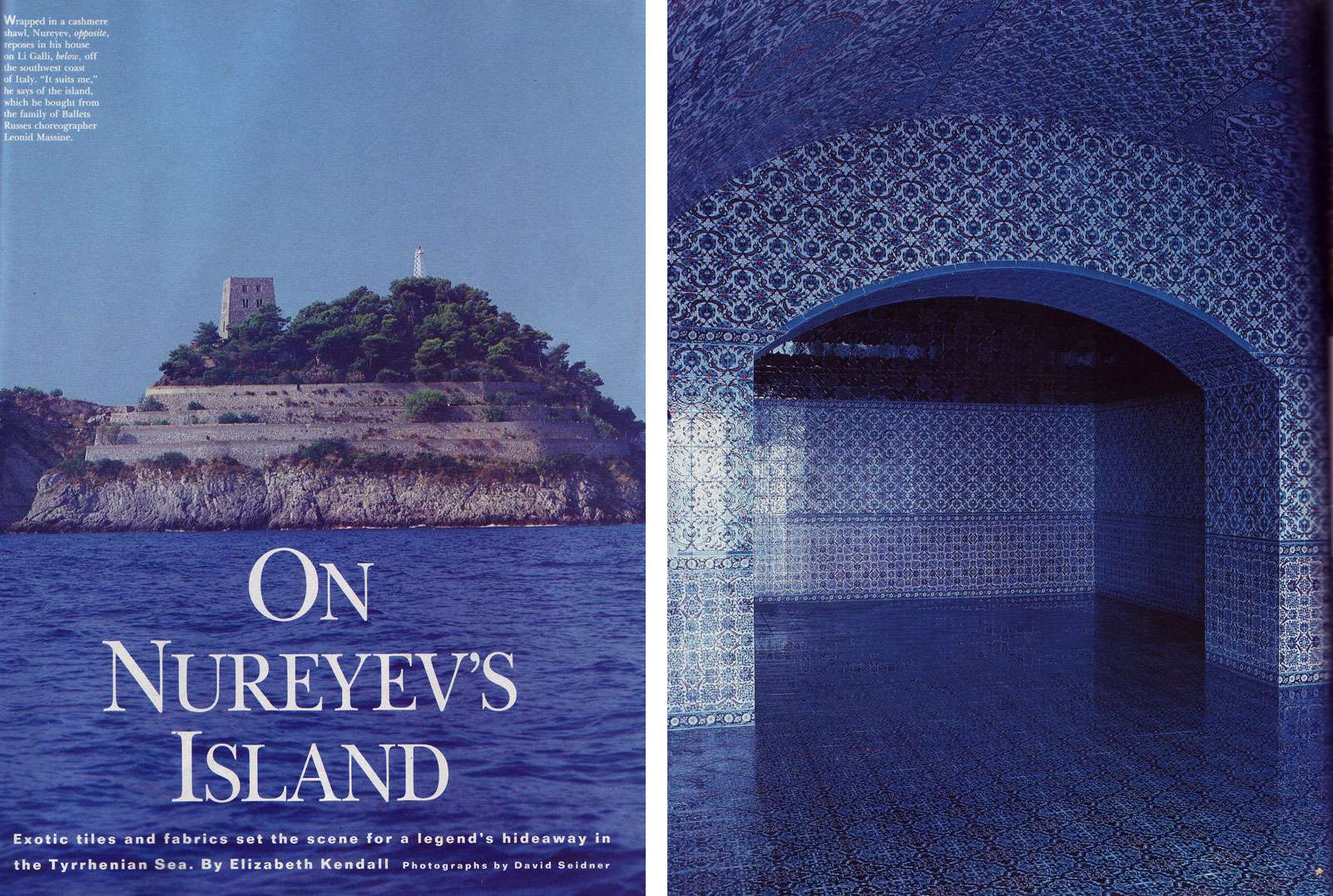
And, because you can't really fully understand someone without seeing where he lives, I leave you with one of his residences: a house on his private island on the archipelago of Li Galli, off the Amalfi coast, in Italy.

The images are bittersweet; Nureyev passed away from AIDS only a few months after they were published in House & Garden, 1992.  The accompanying article gives no indication of his ailing health.  Perhaps it's just this knowledge that makes the house look exceptionally lonely in retrospect. It's beautiful, but somehow desolate, isn't it?


Scans from House & Garden, August 1992. Photographs by David Seidner.

10.26.2009

Bedazzled Dog

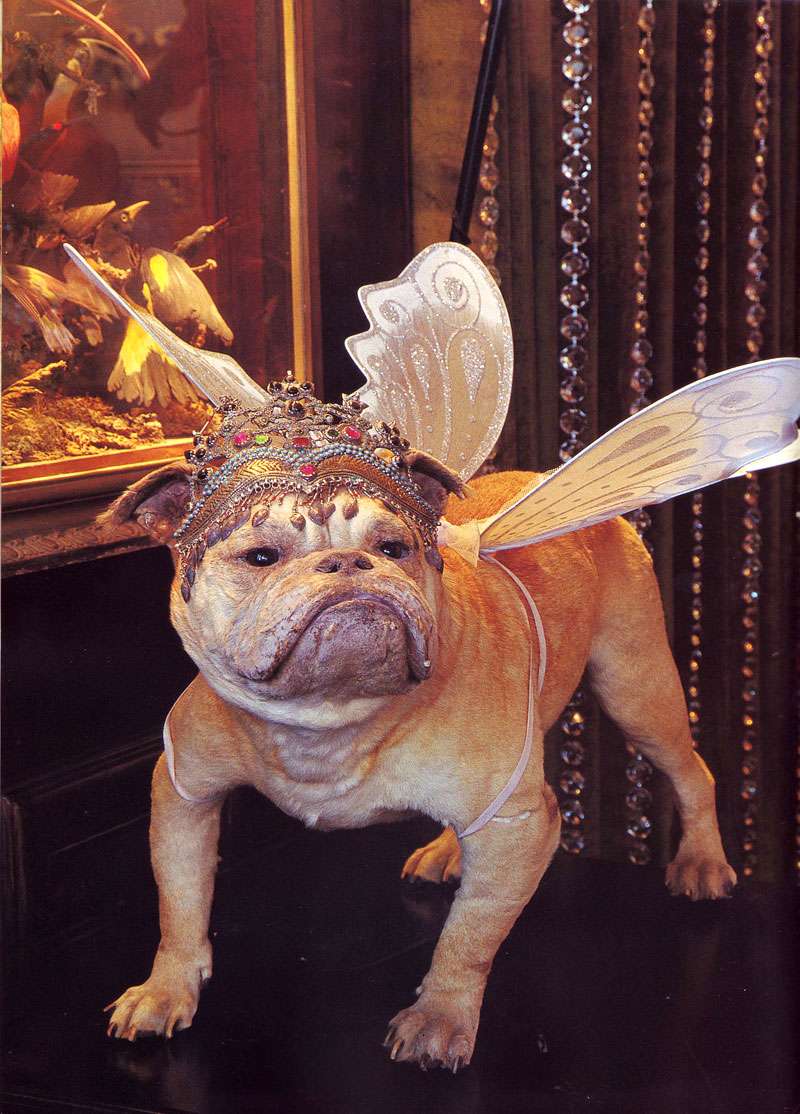
When I first saw this dog, I thought, "Ohhhhh, how cute!" ...


...And then, I learned that it's... STUFFED (?!!!!)

Now, I'm not quite sure what to think.  Amazing how this little detail changes everything. Can taxidermy possibly be cute? My gut says no.
  
Dog by Les Trois Garçons.  Image from Divinely Decadent, by Stephen Calloway 

10.23.2009

Giger + Lalique = Chic?

Lalique meets Giger? Think: Cleopatra makes a guest appearance in Alien.

Left: Lalique Scarab Vase, Lead Crystal, $1,190.00 at NM. 

Right: H.R. Giger's Harkonnen Chairs, designed for a production of the sci-fi novel Dune in the 90s (but never used), now available through Miles & Generalis. Approx $15,000.00/chair.


Scarab Vase photo via Stella's Roar

10.16.2009

A Baroque Fascination

"Though the association of the Baroque with excess was well understood by the august Victorian and Edwardian(s), the rediscovery of the essential eccentricity and bizarre nature of the Baroque, and the recapturing of its all-but-forgotten whimsicality, has been a phenomenon of the modern era." - Stephen Calloway, in Baroque Baroque

Calloway's depiction of the Baroque is seductive, isn't it?  The Baroque is usually associated with pompous decoration and round, undulating flourishes affixed to grand-scale architecture.  I love (LOVE) Calloway's books because he probes beneath the surface and attempts to capture the essence of the Baroque.  What does he find? An era of experimentation, a state of flux.  Indecorous taste shifting into decorous taste, the gray space in between; you get the picture.  Surely, this is something I can relate to.

What I find so interesting is something he characterizes as a "baroque" fascination with the grotesque and unusual. From Baroque Baroque:
"In the history of taste there is a great fascination in the way in which things once despised are gradually found to have a certain curious charm.  Some continue to gain ground aesthetically, finally to enter the sacred canons of Good Taste."
 The word "baroque" was first used to describe rare, misshapen pearls that 16th and 17th century noblemen came to collect and treasure in their cabinets of curiosities. You know, those moments when something looks so bad, it could be good? Often the things I end up loving most are things I hated on first exposure. Now, I embrace that bizarre gut response when I'm lucky enough to encounter it.


Above, Virginia Bates's vision of shattered and decadent decay, from Divinely Decadent, by Stephen Calloway.
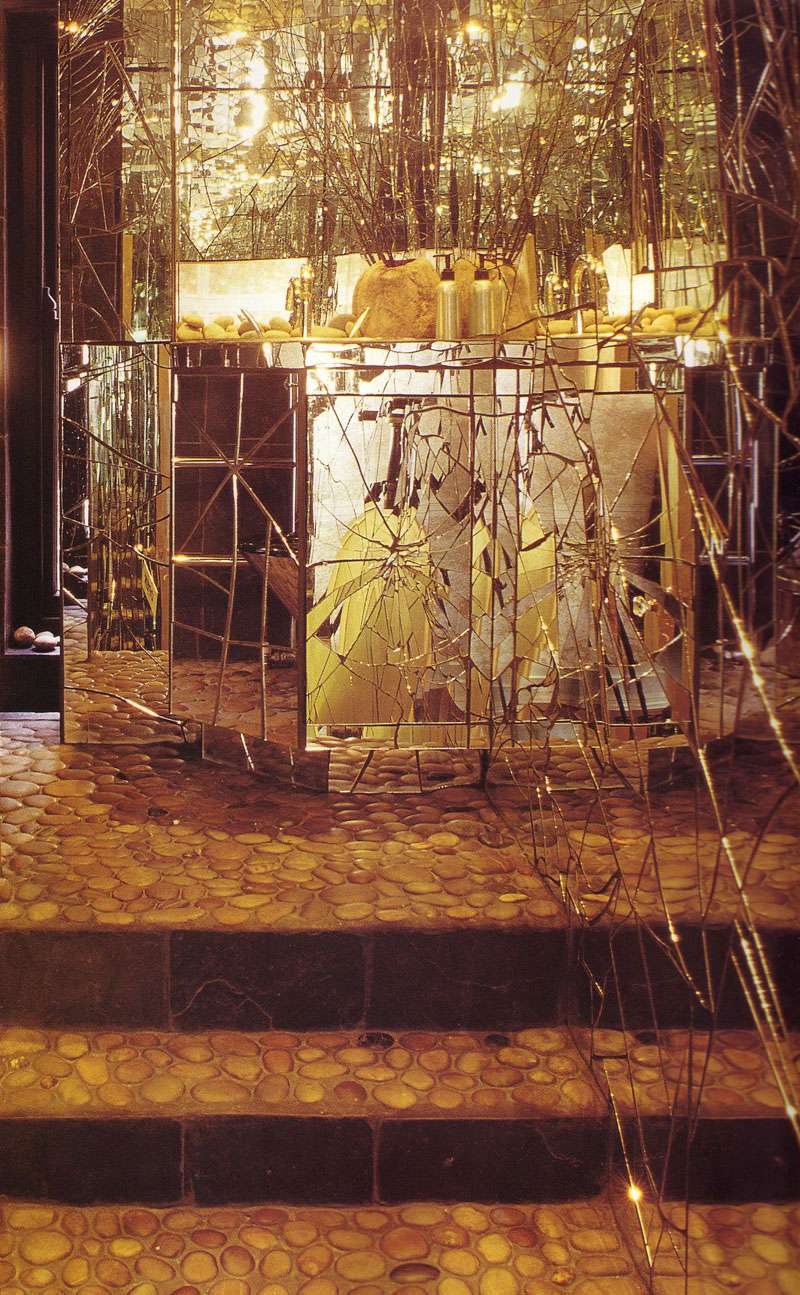


Above, Shattered mirrors in an interior by Carolyn Corben, from Divinely Decadent by Stephen Calloway


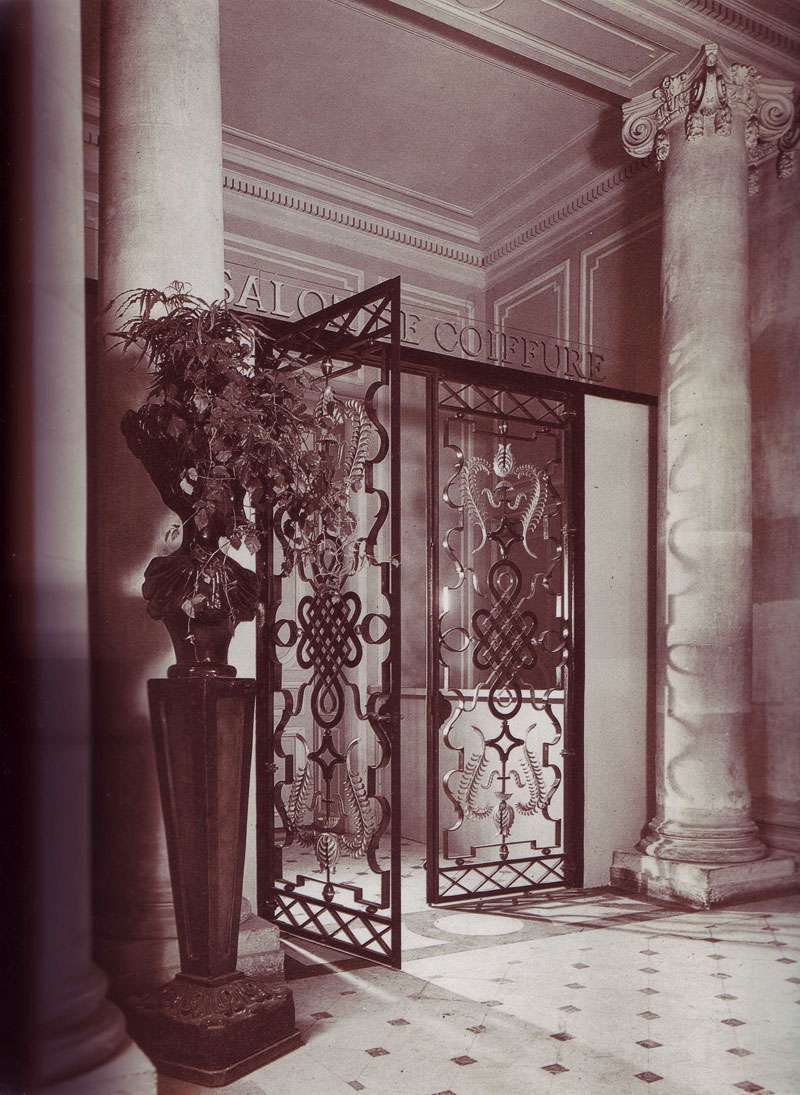
Above, Entrance gate at the Salon de Coiffure, Institut Harriet Hubbard Ayer et Alexandre de Paris, photograph c 1946 by Gilbert Poillerat, from Baroque Baroque by Stephen Calloway.


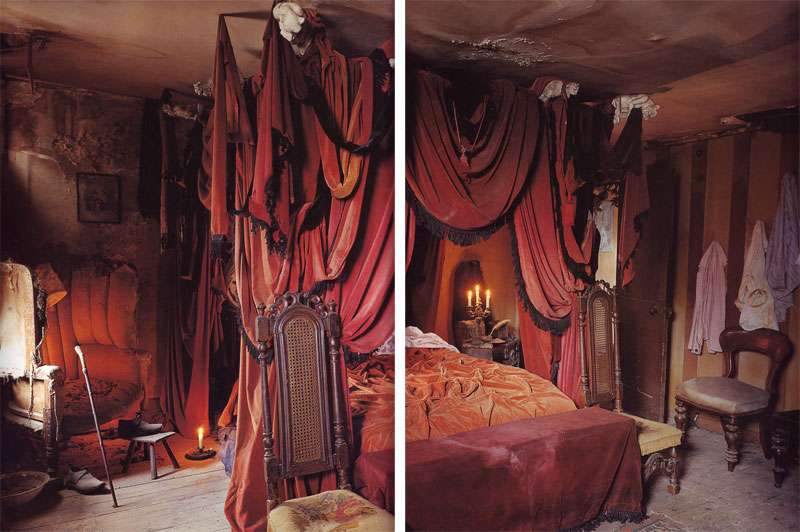
Above, an interior by Dennis Severs, inspired by Charles Dickens' Christmas ghost stories. From Divinely Decadent, by Stephen Calloway. 

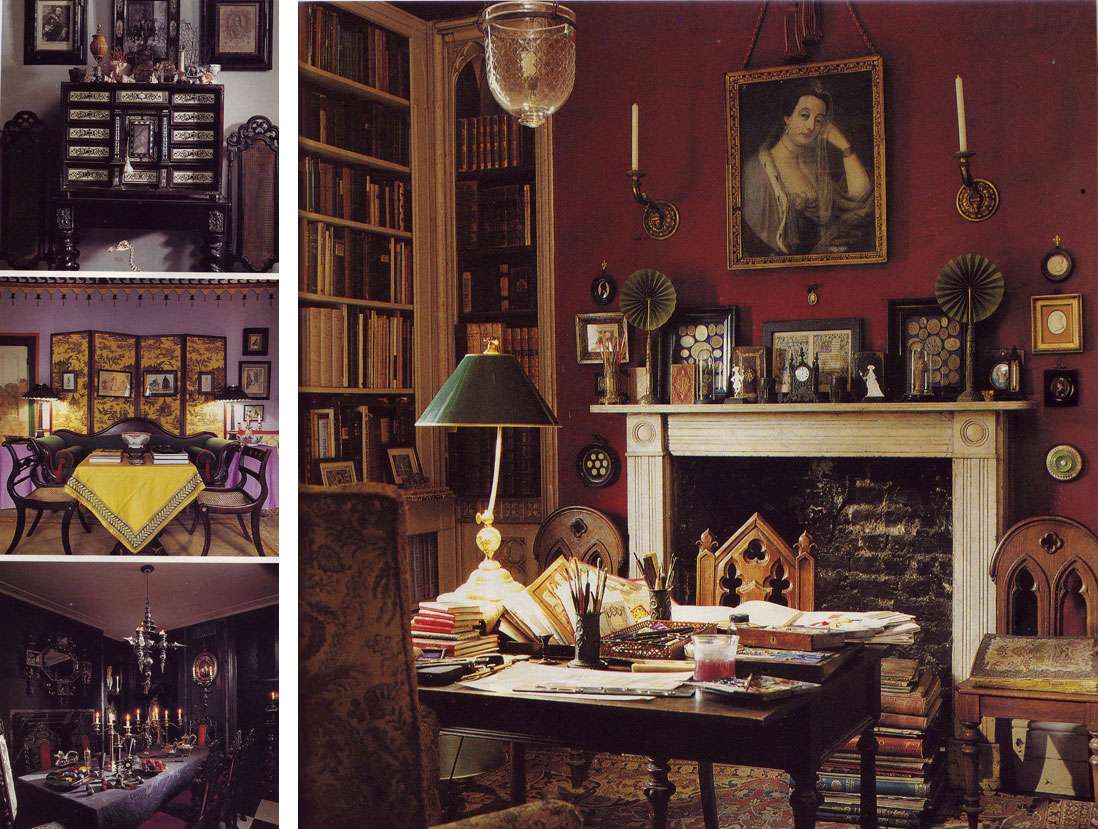
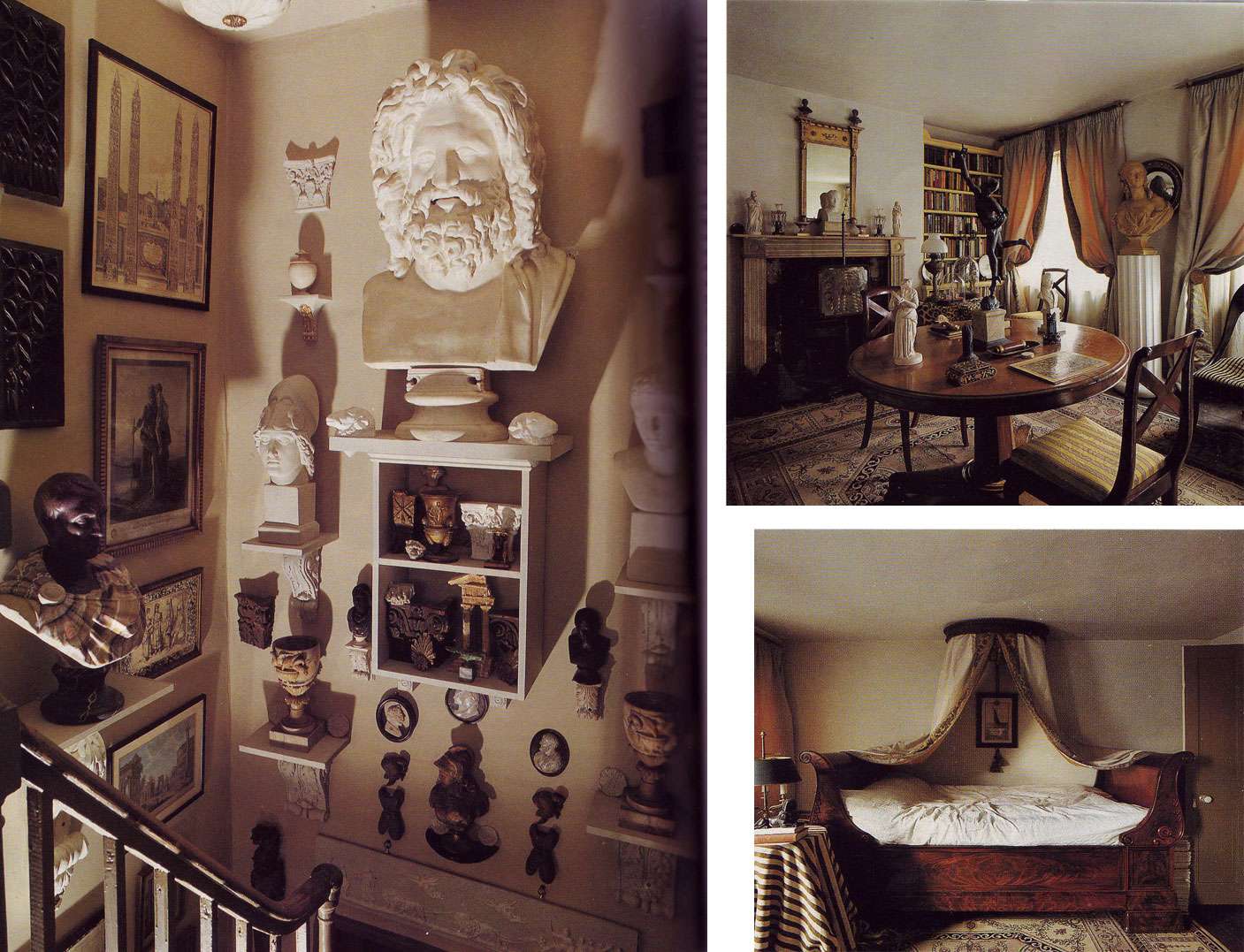
As I was perusing these jaw droppingly gorgeous images from Calloway's books, it suddenly dawned on me that I'd SEEN HIS RESIDENCE!!!!  These are the moments I giddily relish (it's like a behind-the-scenes peek- the man behind the curtain!)  Not surprisingly, the accompanying article was about using your living space as an experimental "taste laboratory."  I liked this idea, and so, I've scanned Calloway's apartment to share with you:


Above, Calloway and his wife, artist Oriel Harwood. From House and Garden, April 1991.

For me, this space isn't so much about perfection in taste (I don't necessarily even LIKE certain aspects of it), but it's not about that.  It's more about the excitement of seeing someone's vision and design journey; its an appreciation of the extremely personal nature of the apartment, even if it's almost too personal to love wholeheartedly unless you're the designer.


In other words, I'm intrigued. And appropriately so. After all, what could be more baroque than that?


Scans of Calloway's residence from House & Garden, April 1991.

10.13.2009

All That Glitters...

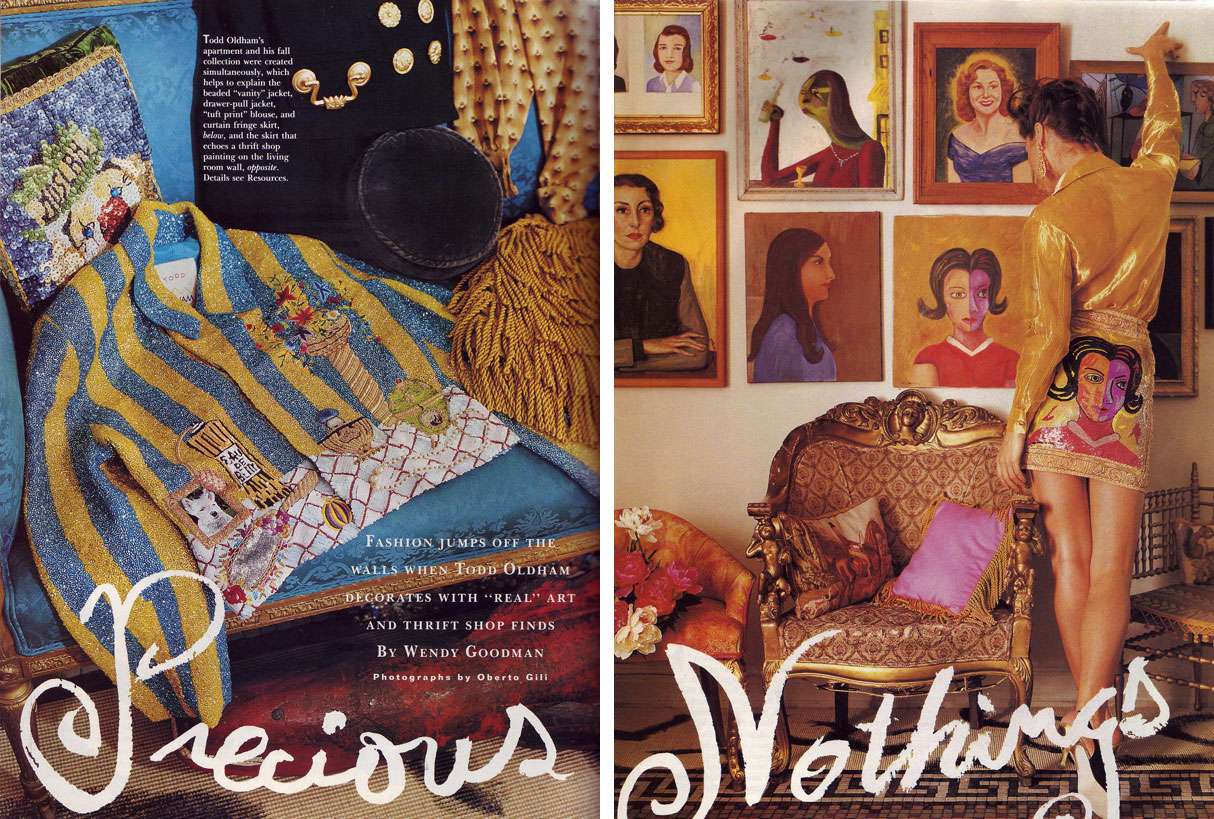
...apparently resides in Todd Oldham's apartment.

Fashion designer Todd Oldham on his apartment with partner Tony Longoria:
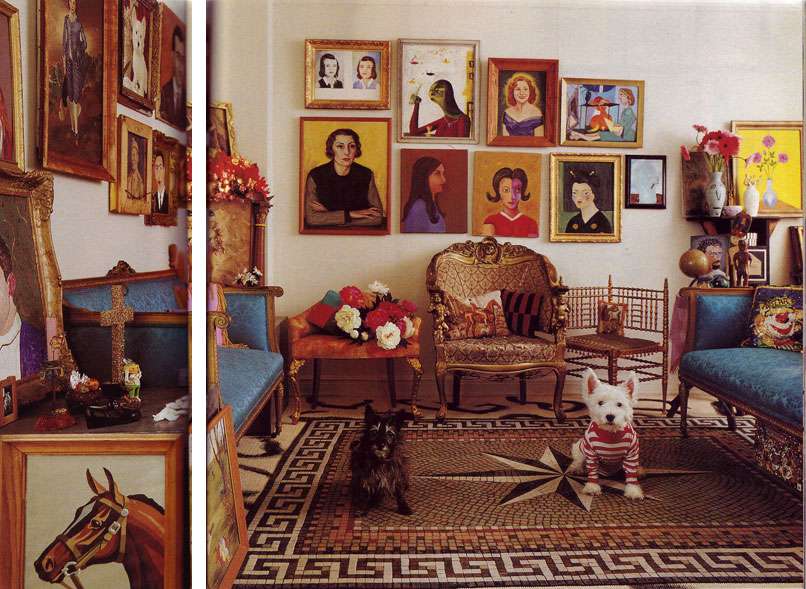
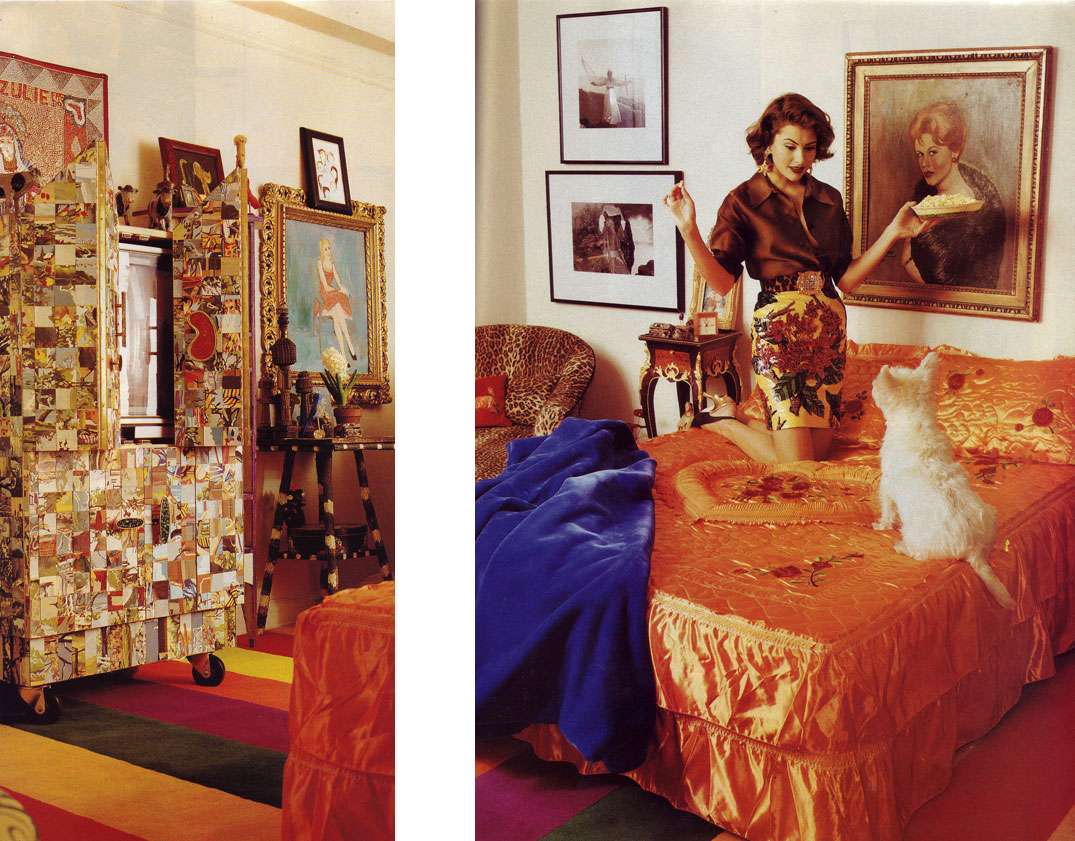
We blend the real and the precious— which is usually what we call junk.  I have such a strong understanding of luxury and a strong understanding of junk and the way they can be combined.  It's not a reference point that is immediately accessible to a lot of people.
                                                                                                             House & Garden, September 1992


Scans from House & Garden, September 1992
Related Posts Plugin for WordPress, Blogger...