Showing posts with label people. Show all posts

6.17.2010

A Royal Faux Hawk

EDIT: I'm currently working on creating an organization for my posts.  Somehow, in the process, this old one was republished. Not sure how it happened, but rest assured, I'm not trying to make you feel like you're losing your mind, your deja vu is justified!!!


"...With the decline in the popularity of hats, the business closed in 1970, brought down by what Mr. John described acidly as 'orthopedic hairdos and french fried curls.'" - From Mr. John's obituary , The New York Times, 1993.

WELL. In that case THANK YOU, french fried orthopedic curl-styling hairdressers, for making this hat, by none other than Mr. John, available for my purchase, at a thrift shop. Who would throw this out? I'd like to have a word with her.

From the obituary (full text here):
In the 1940's and 1950's, the name Mr. John was as famous in the world of hats as Christian Dior was in the realm of haute couture. At a time when other milliners were piling on flowers, feathers and tulle, Mr. John was stripping hats naked, relying on pure shape for effect...

His clients included stars of film, stage, opera and the society pages. Among the fashionable women who wore his designs were the Duchess of Windsor, Gloria Swanson, Gloria Vanderbilt, Lauren Bacall, Joan Crawford and Rosalind Russell. His hats were worn by Vivien Leigh in "Gone With the Wind," by Marlene Dietrich in "Shanghai Express," by Greta Garbo in "The Painted Veil" and by Marilyn Monroe in "Gentlemen Prefer Blondes."
Images styled and photographed by (IN)DECOROUS TASTE. Modeling by Cristin.

4.23.2010

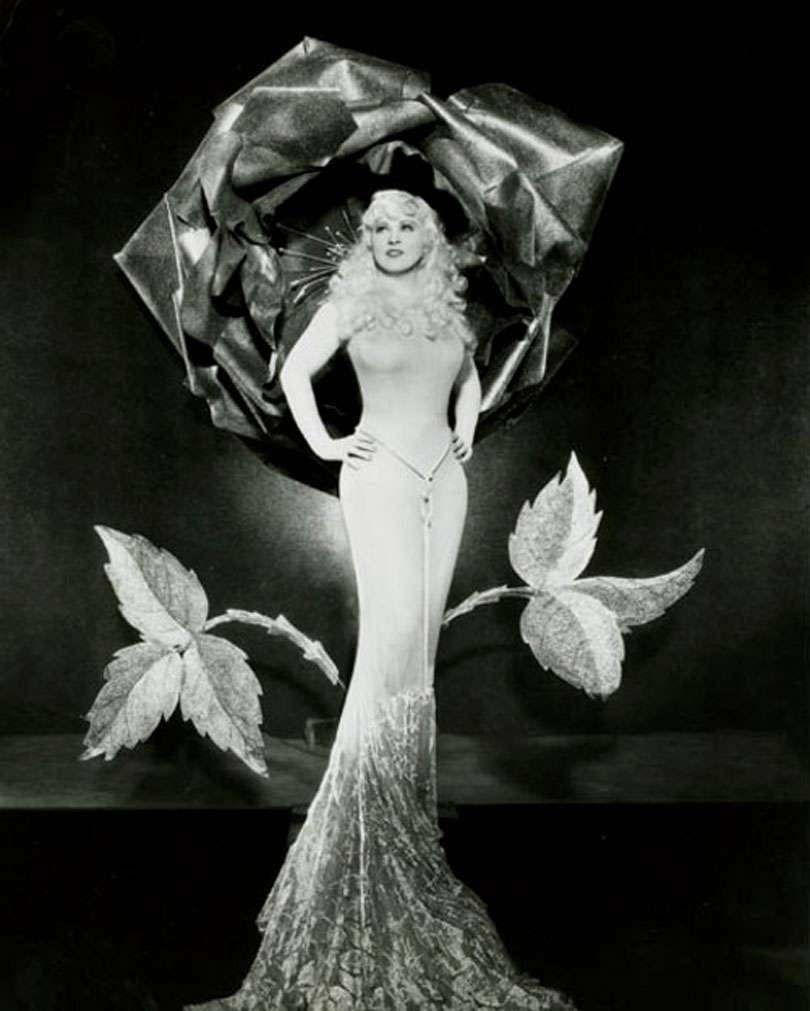
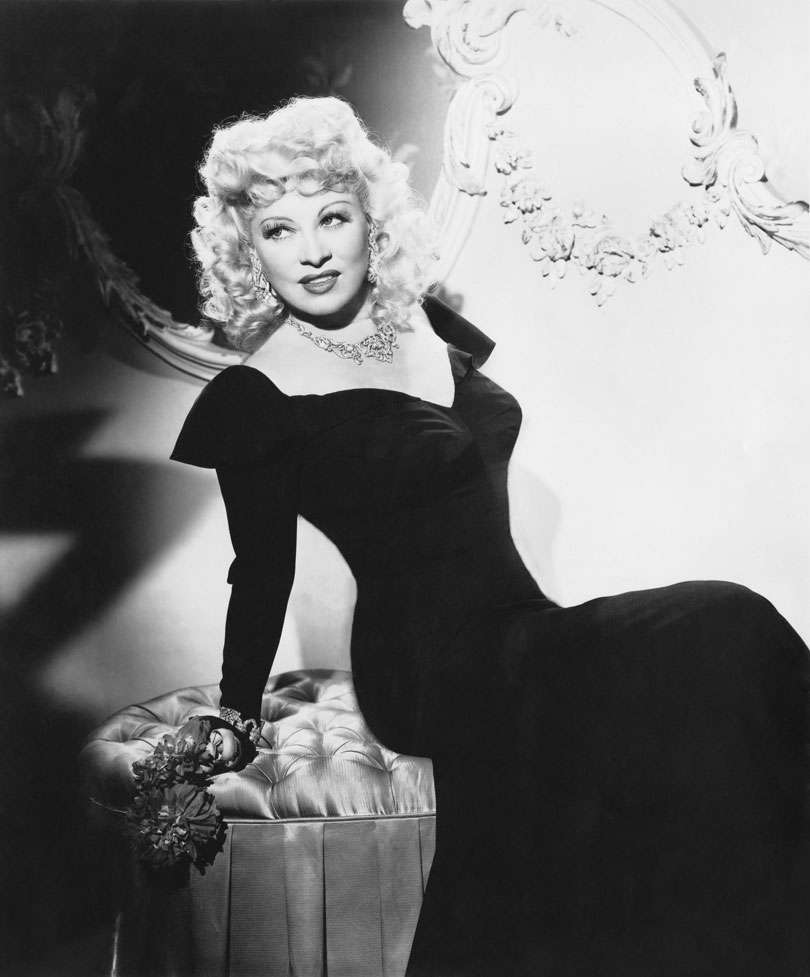
"MEN ARE MY LIFE, DIAMONDS ARE MY CAREER" -MAE WEST

Forgive me, forgive me! Time has been running away from me like mad. Lots to share, meatier post coming soon, but for now, MAE WEST.  Because she's stylish, fabulous, and has one-liner quips (see post title) that far surpass even Karl the Kaiser's.  And that's no small feat, right?

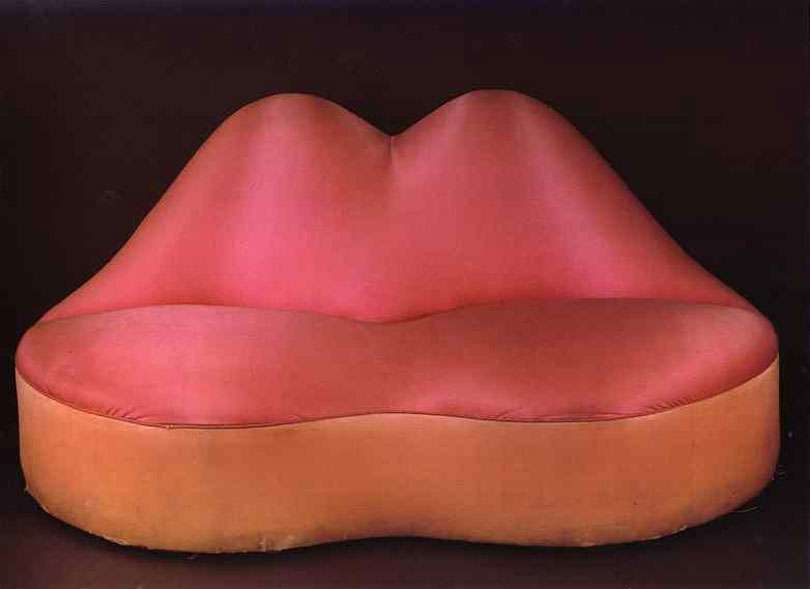
Oh! And the image of the sofa is Salvador Dali's famous lip sofa (there's an image below).  It was modeled off of Mae's mouth.  Could you tell? 


4.18.2010

VILLA VERSACE

Just got the Sotheby's catalog for the 2009 auction of Gianni Versace's Lake Como residence, Villa Fontanelle.  As you can see, I managed to resist the urge to scan the entire catalog.
Dirty clothes never stayed on the floor for more than a few seconds and beautiful gowns kept arriving, I had this fantasy that I was in an Antonioni film. I felt like a spoilt princess.  The Versaces really know how to live.
                                                                                Madonna, UK Vogue, October 1997.
An opulent version of Camelot?


Scans from Paintings, Furniture and Works of Art From the Collection of Gianni Versace, Villa Fontanelle, Lake Como, London 18 March 2009.

4.03.2010

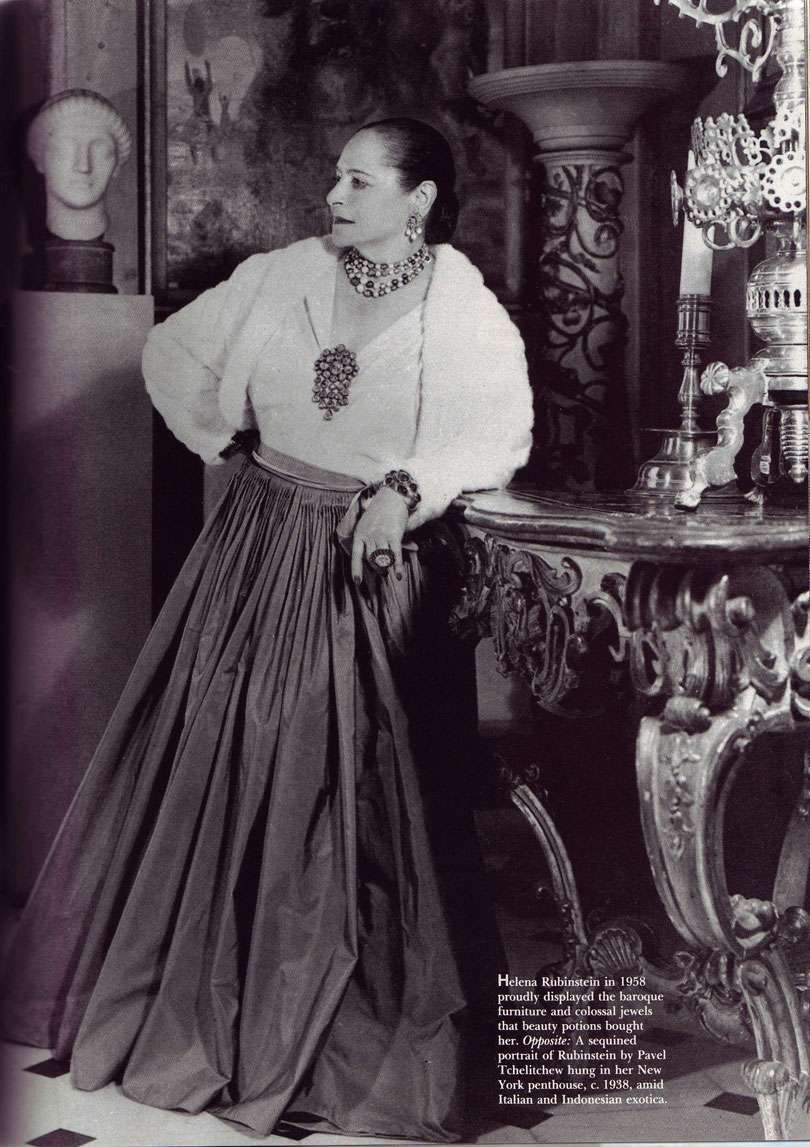
"I LIKE MY OWN TASTE, GOOD OR BAD!"- HELENA RUBENSTEIN

...And Helena Rubenstein had so much good taste, I'm pretty sure it was oozing from her perfectly refined, scrubbed, and polished pores.

Not only did her wildly successful beauty empire employ 30,000 people, making her one of the richest women in America at the time, but she was also an extremely stylish, fiercely saucy taste maker.

1. There was the lucite bed.  That was lit from within.  Ohmygod, I'm practically hyperventilating as I type this. The ability to work a light up plastic bed with dignity (and of course lots of Baroque flourishes— always a fan) is admirable. It was said that her style was a cross between "Byzantium and the flea market."  I rather like that mix.
Among the shimmer of the Venetian mirrors, serendipitous kitsch, and treasure-laden vitrines, the pièce de résistance was what all Rubstein initiates refer to with delight as the "plastic bed."  Created out of Lucite by Rubenstein's package designer Ladislas Medgyes (who had previously used the material for powder boxes), the transparent bed lit up by means of hidden fluorescent bulbs.  When Madame reposed upon it, the effect was of a transfiguration upon a crystal sleigh.
While Rubenstein loved her bed, it puzzles me that she did NOT feel the same about Cecil Beaton's transformation of her gothic style picture gallery into a "Japanese inspired bamboo folly."

 2.  This skirt...

3.  Her fiestiness: When denied a Park Ave triplex because she was Jewish, Rubenstein purchased the entire building.

4. And of course, the deliciously juicy Knightsbridge residence by David Hicks, in shades of purple and magenta, inspired by a favorite Balenciaga dress, and a cosmetics palette:


I don't run around calling everyone a style inspiration, but Helena Rubenstein, I welcome you with open arms, flashing lights, and Lucite confetti candles!

Scans from House & Garden, November 1992, "The Reign of Helena Rubenstein" by Amy Fine Collins

3.03.2010

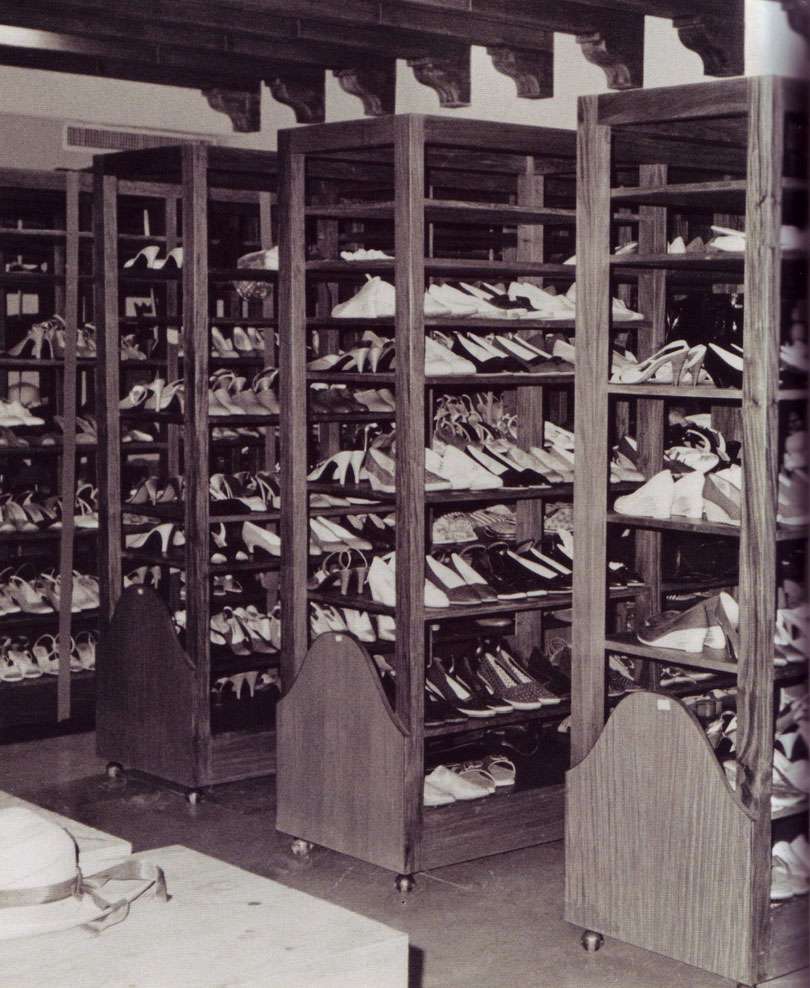
IMELDA'S CLOSET

Above, Imelda Marcos's legendarily enormous collection of shoes. Scan from Dictator Style, by Peter York.
When the incoming Aquino government audited the Marcoses' quarters in Malacanang Palace in Manila they said they'd found 4,000 pairs of shoes.  Mrs. Marcos responded that this was ridiculous— she only had 1,200 or so...
[Ferdinand Marcos] had huge amounts of gold - 7,000 tons of it, a large part of the world's stock. So much, in fact, that he built walls of it at home, using it as a kind of premium brick. Unfortunately, he didn't tell Imelda. Always fussing over her interiors, Mrs. Marcos disliked the way the house was partitioned into tiny rooms, so she ordered some of the walls to be knocked down while her husband was away. The bricks were stacked in the garden, and an anxious Marcos wasted no time in retrieving them on his return.
 Peter York, in Dictator Style, on the lifestyle of Ferdinand and Imelda Marcos

2.28.2010

SHE SHOT MARILYN

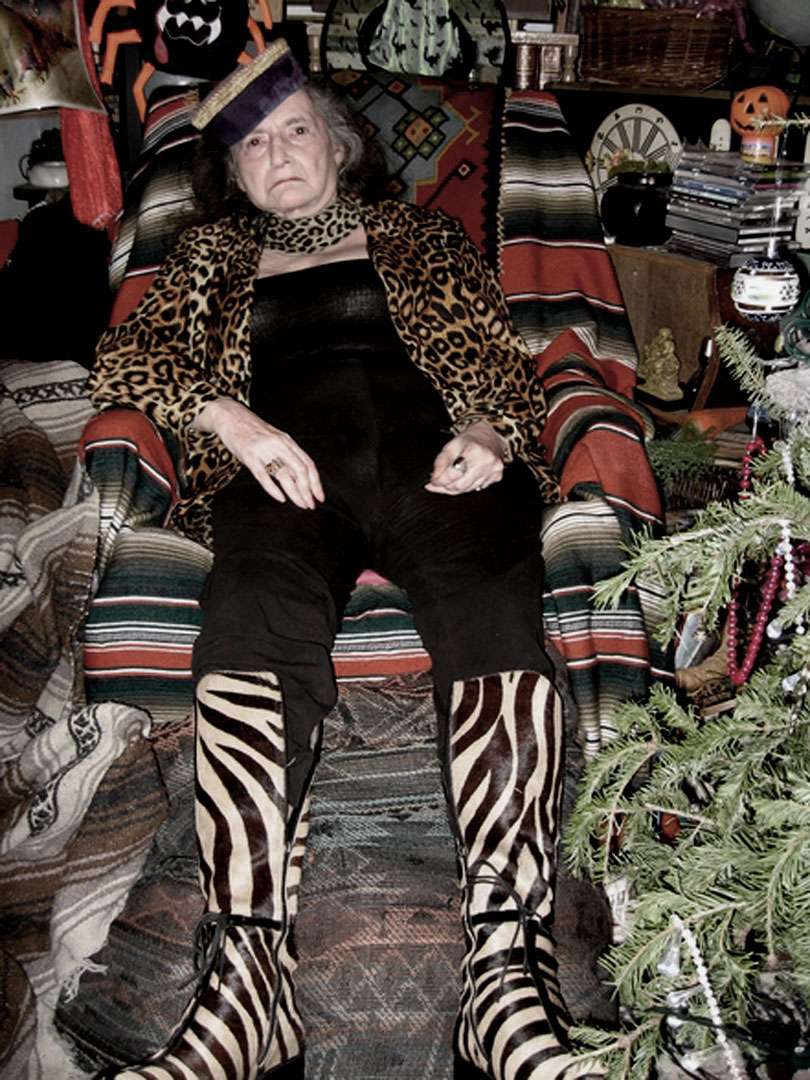
Dorothy Podber (1932-2008): Warhol scene girl, performance artist, wild woman:


She was most famous for shooting Andy Warhol's Marilyns, literally.  In the forehead. With a pistol.  After which, she was instructed not to return to the Factory.  It's worth noting that the "shot" Marilyns are vauled higher than their unshot counterparts.

From the NY Times obituary:
Certainly the most outrageous [of her exploits] was her unsolicited contribution to a few of Warhol’s “Marilyn” silk-screen paintings. In the fall of 1964 Ms. Podber, a friend of the photographer and Warhol regular Billy Name, visited Warhol’s Factory on East 47th Street in Manhattan with her Great Dane (named Carmen Miranda or Yvonne De Carlo, depending on the account). Ms. Podber asked Warhol if she could shoot a stack of the “Marilyn” paintings; he apparently thought that she wanted to take pictures of them and consented.

But she produced a pistol and fired at them, penetrating three or four. One of them, “Shot Red Marilyn,” with a repaired bullet hole over the left eyebrow, sold for $4 million in 1989, at the time setting a record at auction for a Warhol work.

“After she left,” Mr. Name told Ms. Bergmann, “Andy came over to me and said: ‘Please make sure Dorothy doesn’t come over here anymore. She’s too scary.’ ”
Ms. Podber told Ms. Bergmann that when money was low, as it often was, she generally found unorthodox ways to make it. She once ran a service that dispatched maids to doctors’ offices, primarily as a way to get the keys to the doctors’ drug cabinets. “I never worked much,” she said.
From Joy Bergmann's article, at Sapid and Rapid:
During Dorothy and Ray [Johnson]’s ‘dead animal’ phase, they gave Heide a gift: a clock with no hands. “When you opened the face of the clock, out dropped a rat, spray-painted gold.”

Isabelle Fisher remembers Podber being held at the Women’s House of Detention on Sixth Avenue for running an illegal abortion referral service; according to Podber, an abortion was also performed in her apartment...
Another time Johnson invited a collector up to his Norfolk Street apartment for a viewing. Upon arrival, the space was completely bare, save for an armoire in the corner. Johnson reportedly said, “This is my work,” opened the cabinet and Podber jumped out, laughing weirdly.  
Madness embodied. Is it any wonder? She was known for the generously sized bowl of crystal meth she kept on her coffee table.

Best friends with Ray Johnson (see here).

Oh, and she kept a pet marguey.—you know, a type of ocelot.

2.12.2010

No Chocolates, JUST CHINTZ

Seeing as it's almost V-Day, I thought I'd share with you one of my all time favorite bedrooms ever, which just so happens to be one of the most glorious feminine rooms in existence.  Remind me why men aren't allowed to like chintz?

The bedroom was part of the New York city residence of Marie Hélène de Rothchild (1927-1996). The bed, walls, and curtains were all designed by the late (and very great) Geoffrey Bennison— the print is "Roses." I love everything about it, actually.

Scan from Beds by Diane Von Furstenburg. 

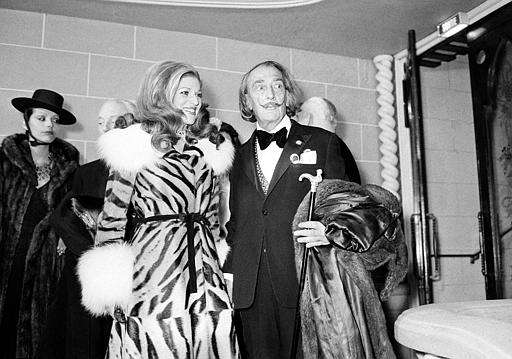
Not only did she have phenomenal taste, Marie Hélène was a fascinating character, known in particular for her extravagant parties and benefits.  Here, she's pictured with Salvador Dali in one of the most amazing coats I have EVER SEEN:

Image via Frillr.com.
From the New York Times Obituary (1996):
The Baroness, who enjoyed creating fantasies for her social occasions, once greeted 150 guests at a dinner (Diner de Tetes Surrealistes, whose invitations had to be read in a mirror) dressed as a stag at the kill, with a mask of towering antlers and pear-shaped diamond "tears" on her face. 
At a ball she gave at Ferrieres for 1,600 people, the chateau was covered in white muslin to make it look like a huge diamond-studded cobweb. A gala for the Paris Ballet transformed the Palais Garnier into a woodland, with trees and vines climbing to the ceiling. At another function, her Bal Proust, celebrating the 100th anniversary of Marcel Proust's birth, Cecil Beaton took guests' photographic portraits. 
"When she has made up her mind about something, there is nothing on earth that can deter her," her husband once said.

1.24.2010

Cradle Robbing

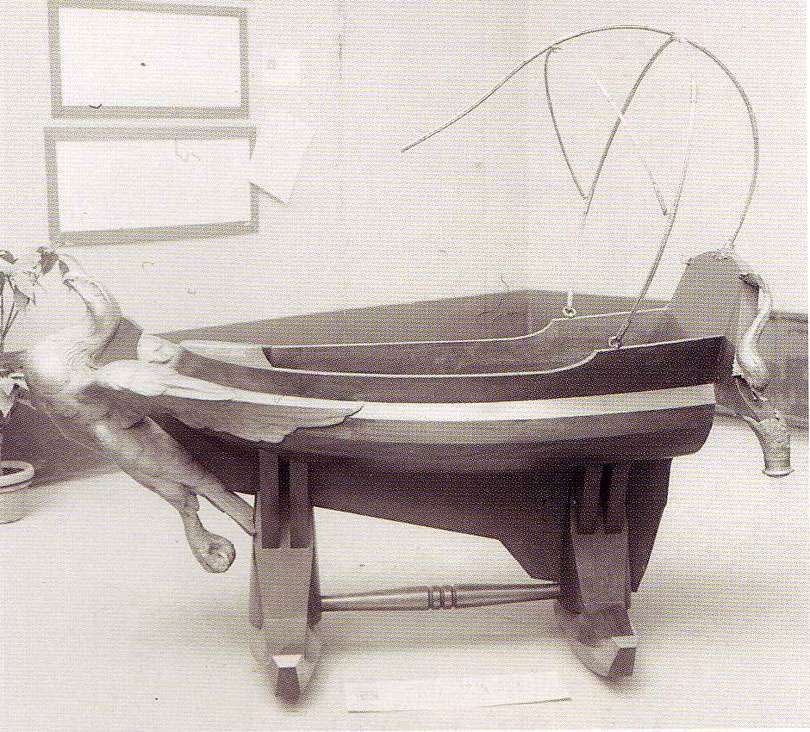
A cradle owned by dictator Benito Mussolini.

I have absolutely no use for a cradle. Can this be made in full size?

"Made for Il Duce's youngest son, it combines the theatrical gilded eagle prow (a sort of boat on legs) with the solidity of the best ninetheenth-century furniture, from a single block of wood. It must weigh a ton. Presumably the metal strut at the back was to stretch white linen over when Mussolini Junior was out in the sun."
-Peter York, in Dictator Style

1.23.2010

Aviator

Head to toe leather, Amelia Earhart (1898-1937).
Photo from the Smithsonian Institution, National Air and Space Museum.

12.18.2009

Pineapple Follies

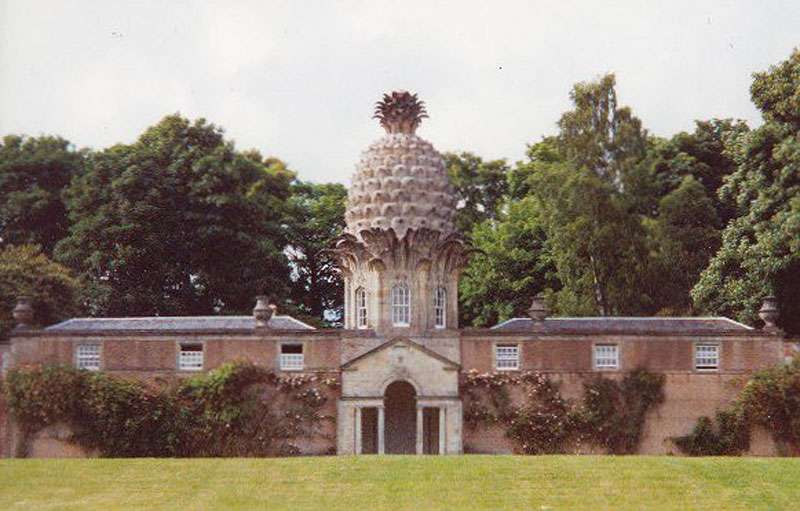
John Murray, 4th Earl of Dunmore, had his pineapple folly...


Above, Dunmore (who was the last governor of colonial Williamsburg, Virginia) built his pineapple folly in 1761, in Dunmore Park, Scotland. A larger scale version of the sailor's tradition of leaving a pineapple on the door stoop to mark a safe return home, Dunmore's pineapple measures 37 feet. Pineapples were indeed grown on the grounds, with heated hot-houses.

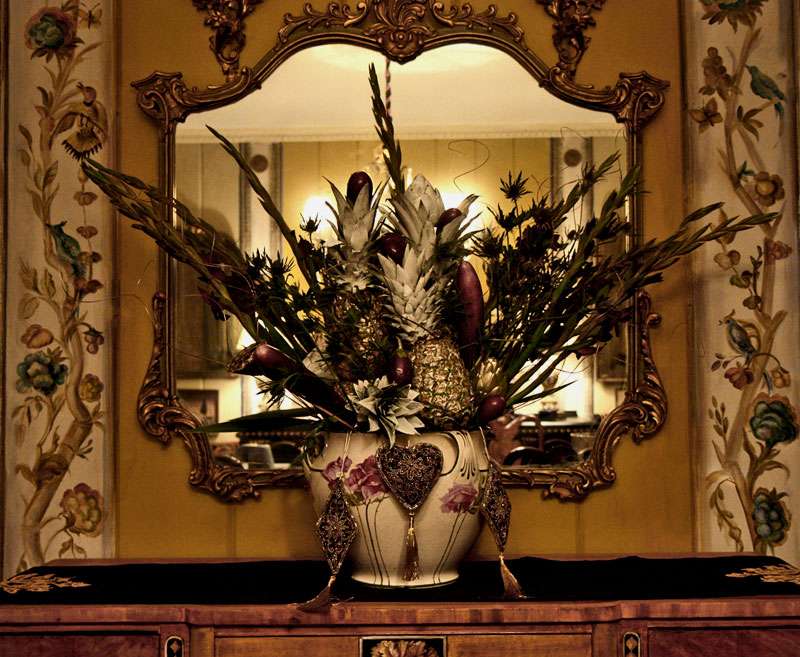
And so, I have mine...


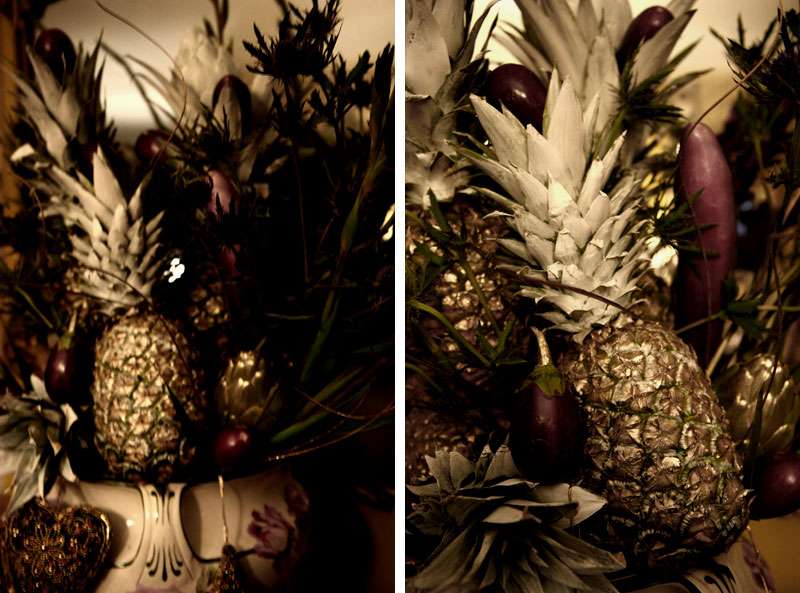
Outdone by the Earl of Dunmore? Possibly. Rather unfortunately, my centerpiece is nowhere near 37 feet tall. Nor can I live inside of it. What I can assure you is that the painted mass of artichokes, pineapples, (nude) eggplants, flowers, and beaded ornaments will probably work its way onto the table as a centerpiece at some point during this holiday season!

OH! And before I forget, in a list of links for readers to check out, Eater cited (IN)DECOROUS TASTE'S jacquard chicken as "The nastiest looking (and fanciest) chicken of all time." Nastiest???!?! And the title of the post? I believe it involved the phrase "Ludicrous Chicken."

Image of Dunmore house, via Wikipedia Commons. Centerpiece, including chinoiserie bird motif backdrop and console, created, painted, and photographed by (IN)DECOROUS TASTE.

11.25.2009

Eat THIS, Martha Stewart!

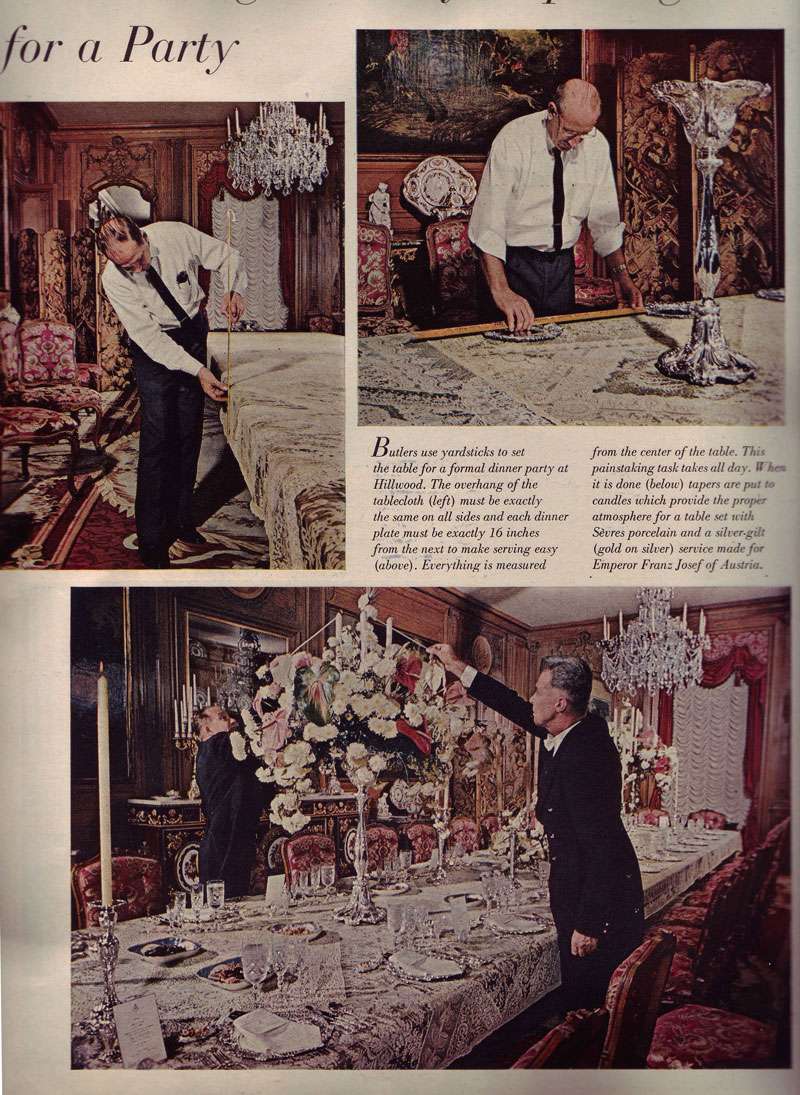
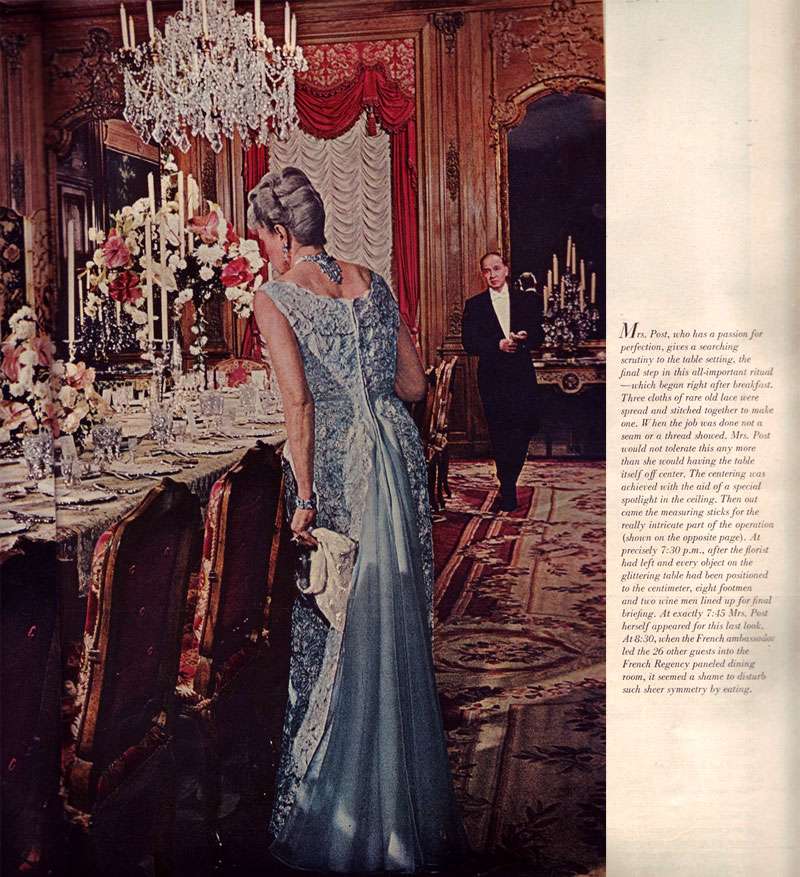
Happy early Thanksgiving, dear American readers!  Are we all preparing for our feasts tomorrow? Whipping out those yardsticks to ensure even tablecloth overhang? Checking that the place settings are spaced at perfect 16" intervals? Measuring everything from the center of the table for exacting symmetry? What's that you say, you haven't started?! Better get crackin', this could take all night.

Following scans from LIFE magazine, November 5, 1965.  "Exacting Ritual of Preparing for a Party" with Mrs. Marjorie Merriweather Post:


11.11.2009

These Walls Don't Lie, Or Maybe They Do

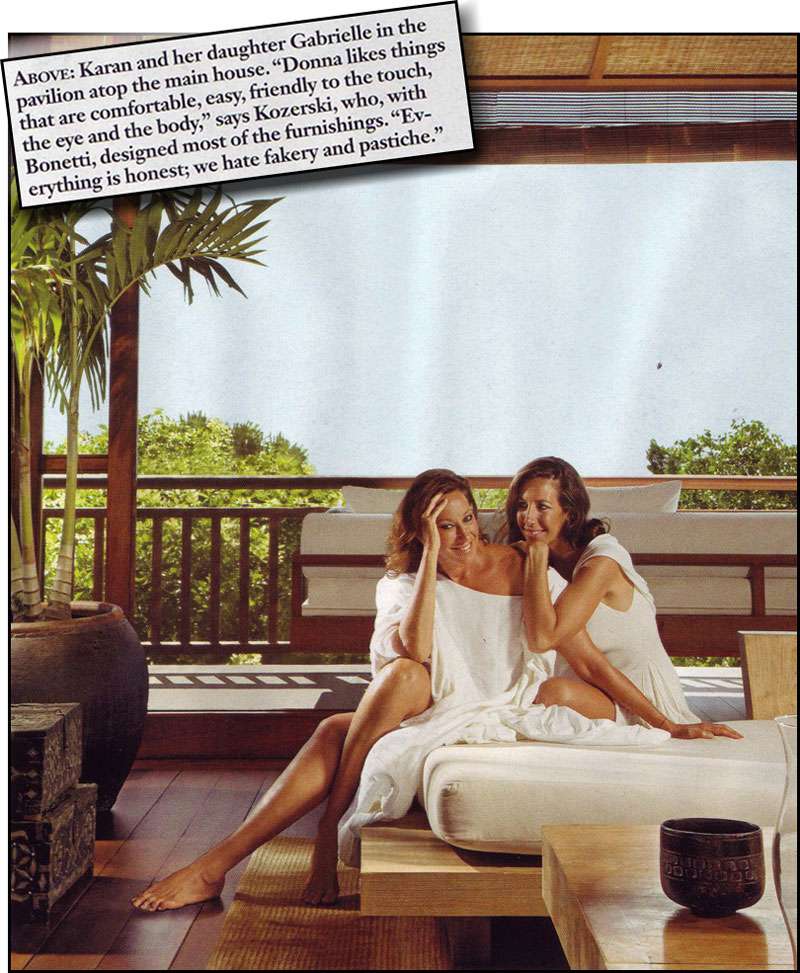
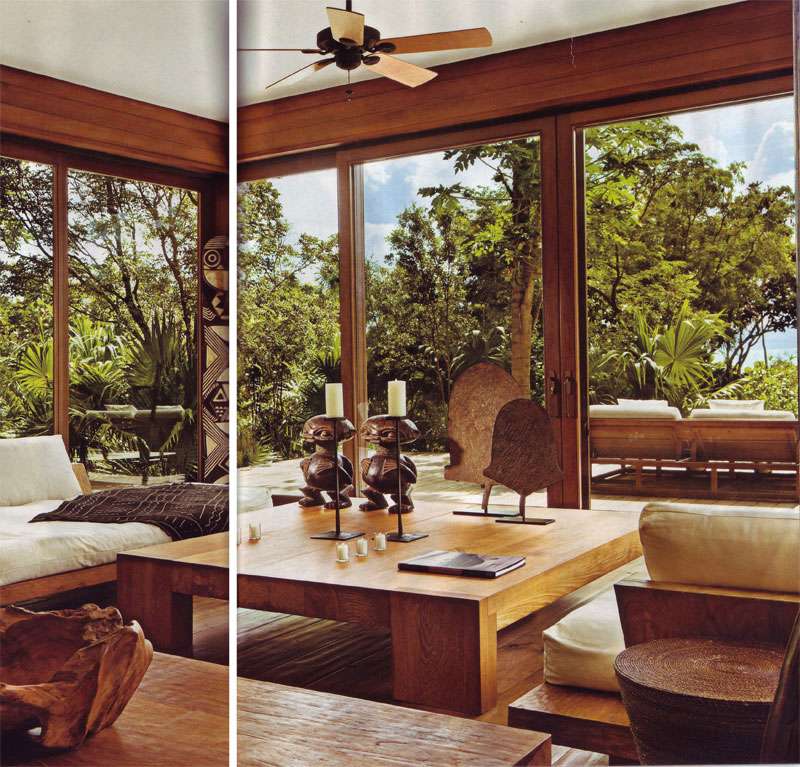
"Everything is honest; we hate fakery and pastiche." - Kozerski on Donna Karan's British West Indies retreat, Architectural Digest, Dec 2009.

Kozerski and Donna Karan might hate fakery and pastiche, but personally, I loathe the implication that certain designs are morally inferior to others.  "Honesty" in design? For real? What's next, chairs that go to church?


I suppose, according to Kozerski, I partake in a whole lot of "dishonest" design.  And you know what? I have fun parading form without function, faux finishes that pose as organic material, new furnishings that look like antiques. Furthermore, there's nothing I relish more than the confrontation of all of these elements— antique, lookalike, and contemporary— all mashed up in one happy, confusing sea of loveliness.  Especially when it's confusing.

But really, who doesn't relish that moment when someone has to touch the flower to see if it isn't wax, or caress the table top to assess it's status as marble? Does knowing the secret ruin the decorative effect?  Worse yet, is it somehow morally inferior to a "genuine" counterpart? Come on Donna, a little game of decorative tromp l'oeil can be exciting.

Is it pastiche? Who knows. You might call it that, but I prefer to think of it as high-low decorating.  And in a time of economic crisis, it's never seemed more appropriate.


Scans from Architectural Digest, Dec 2009. Photography by Durston Saylor.

11.04.2009

Posh Prisons and Pinstripes

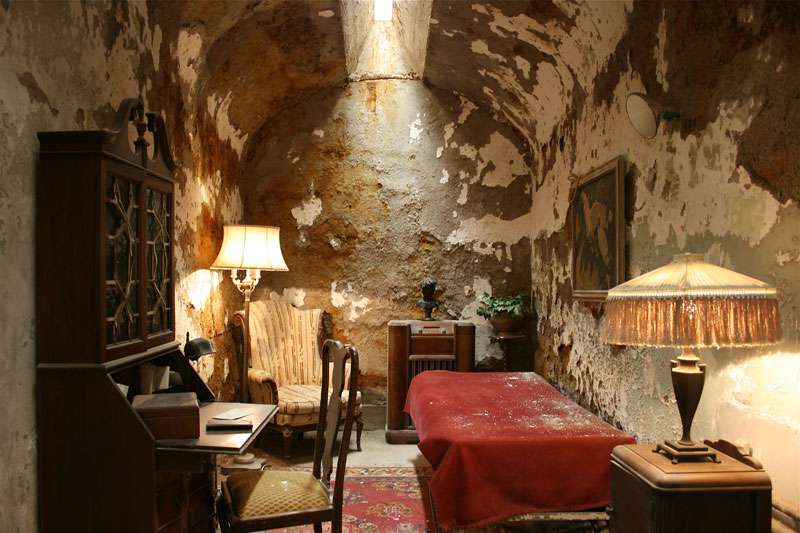
Gangster Style!

Gangster Al Capone (1899-1947)'s prison cell at Eastern State Penitentiary, where he served 9 months for a gun charge:


Above image via Wikipedia Commons

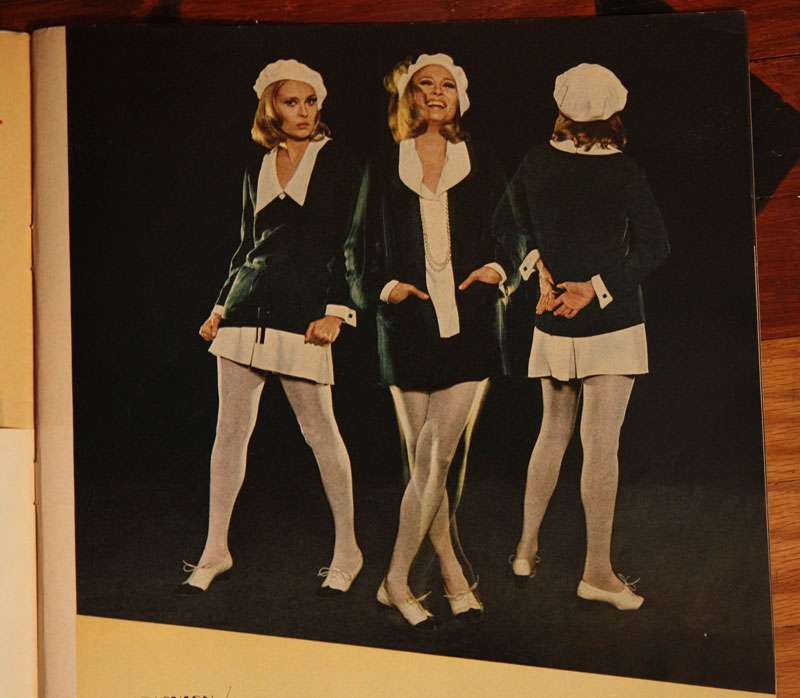
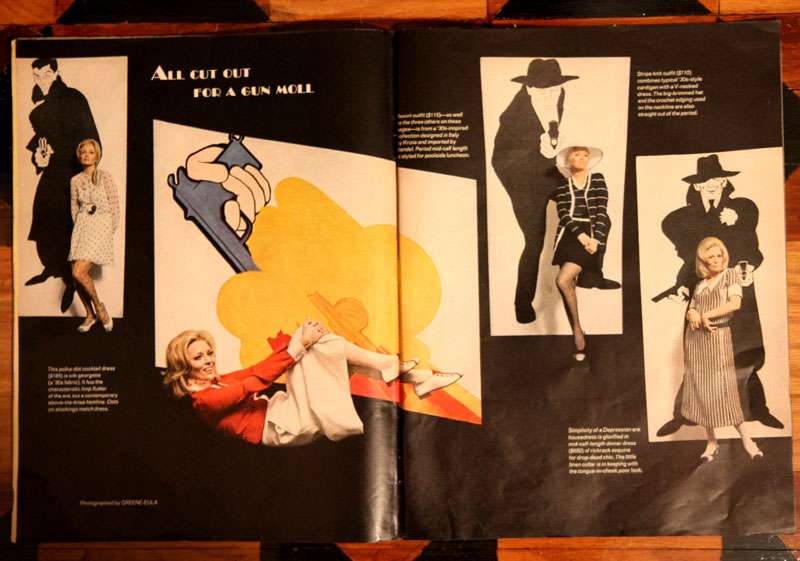
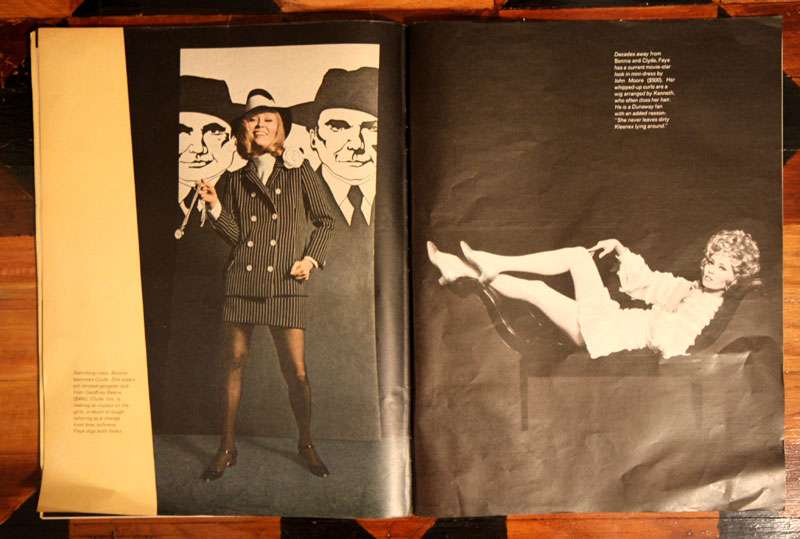
"Bonnie Comes with a Stylish Bang: Faye Dunaway in 30s Revival," fashion editorial from LIFE magazine, January 12 1968, after Bonnie and Clyde:


10.30.2009

The Room That Started It All

I was reading this post at House of Beauty and Culture—about a mother who responded negatively to her child when asked why they don't have the same "things" as the opulent, ancestral Longleat House— when I started to think about the room that launched my own fascination with style and well, pretty things.

The Cathay bedroom at Vizcaya was my first serious design love affair.  It struck a chord, to the point where I was begging for a re-creation of the jester-like chinoiserie draped bed. I furiously plotted a room-renovation. It was my first design undertaking; I was OBSESSED.  To this day, I still love the bed, and the heavenly combination of powdery aqua and gold, with peach thrown in for good measure (for which I still have a weird affinity). Delicious.


All of this got me thinking about creativity.  I recently had a conversation about my cousin, who, like the beastly mother at Longleat, goes to great lengths to discourage what she sees as opulent displays of wealth and excessive materialism.  When her youngest daughter (similarly infatuated with a fairytale bedroom) wanted silk drapes, she denied— "It's not my taste." When she saw my rack (or 10) of platform stilettos, she declared it a clear marker of someone with a "problem."  It's one thing to be financially limited (and she is NOT); it's another to have moral opposition.  My question is this. Is it possible to foster visual creativity with a staunchly anti-materialist and frankly Puritanical attitude?

From On Intelligence, by Jeff Hawkins:
Creativity can be defined simply as making predictions by analogy... Everyone has different life experiences. Therefore, everyone develops different models and memories of the world in his or her cortex, and will make different analogies and predictions.  If I have been exposed to music, I will be able to sing songs in new keys and play simple melodies on new instruments.  If I have never been exposed to music, I will not be able to make these predictive leaps... Our predictions, and thus our talents, are built upon our experiences.

10.28.2009

A Person + A Place: Rudolf Nureyev

Has anyone seen the film Valentino (1977) with Rudolf Nureyev?  Watching it reminded me just how much I love Nureyev (1938-1993).  If you haven't, TRACK IT DOWN.  The tango scene with Nijinsky alone makes it worthwhile (most riveting tango between two men, ever),

Powerful dancer, impossibly gorgeous person:

Nureyev, photographed by Richard Avedon, 1961.


Nureyev, photographed by Richard Avedon, 1961.


Nureyev, in Le Corsaire, 1963.

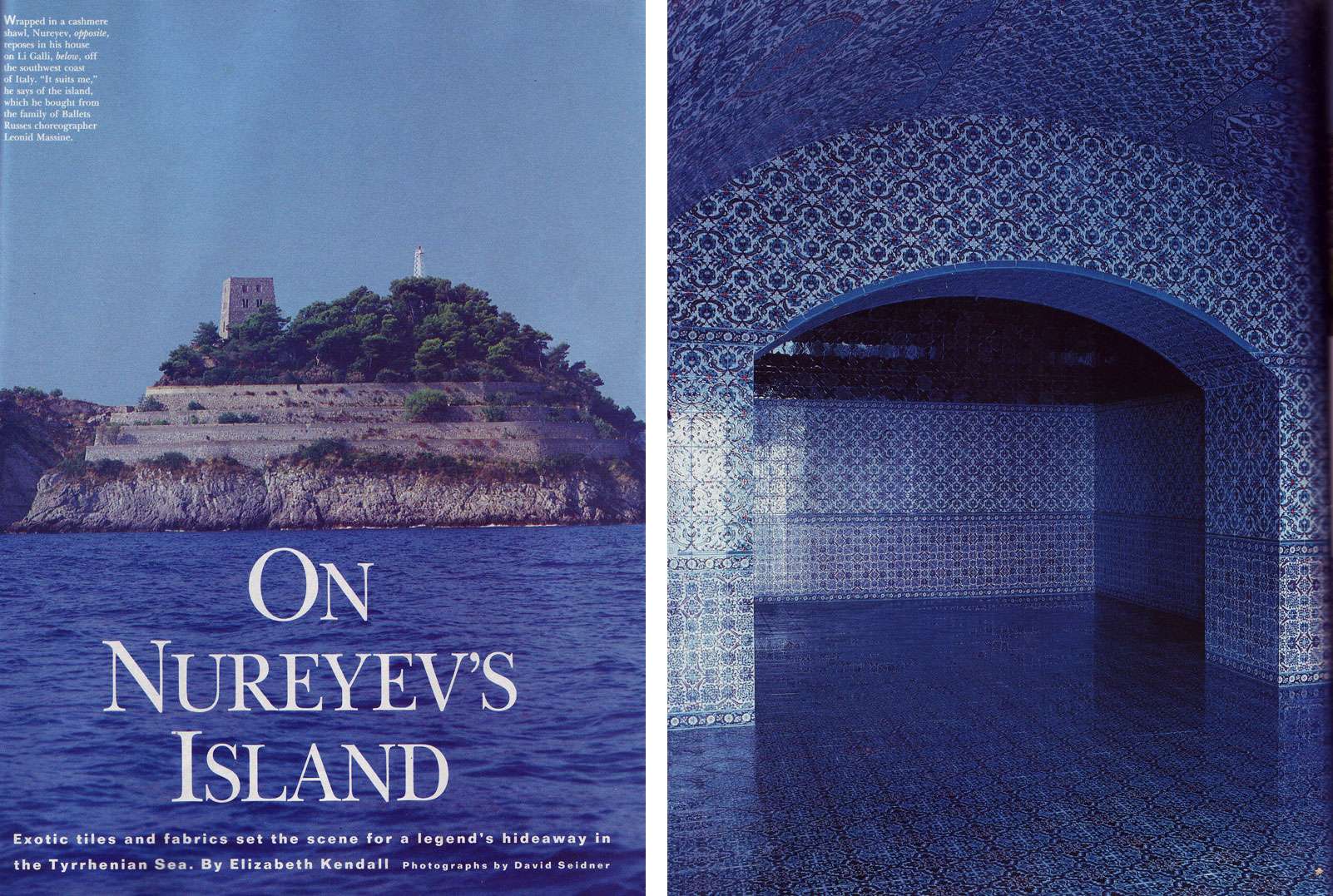
And, because you can't really fully understand someone without seeing where he lives, I leave you with one of his residences: a house on his private island on the archipelago of Li Galli, off the Amalfi coast, in Italy.

The images are bittersweet; Nureyev passed away from AIDS only a few months after they were published in House & Garden, 1992.  The accompanying article gives no indication of his ailing health.  Perhaps it's just this knowledge that makes the house look exceptionally lonely in retrospect. It's beautiful, but somehow desolate, isn't it?


Scans from House & Garden, August 1992. Photographs by David Seidner.

10.23.2009

Annenberg Bling

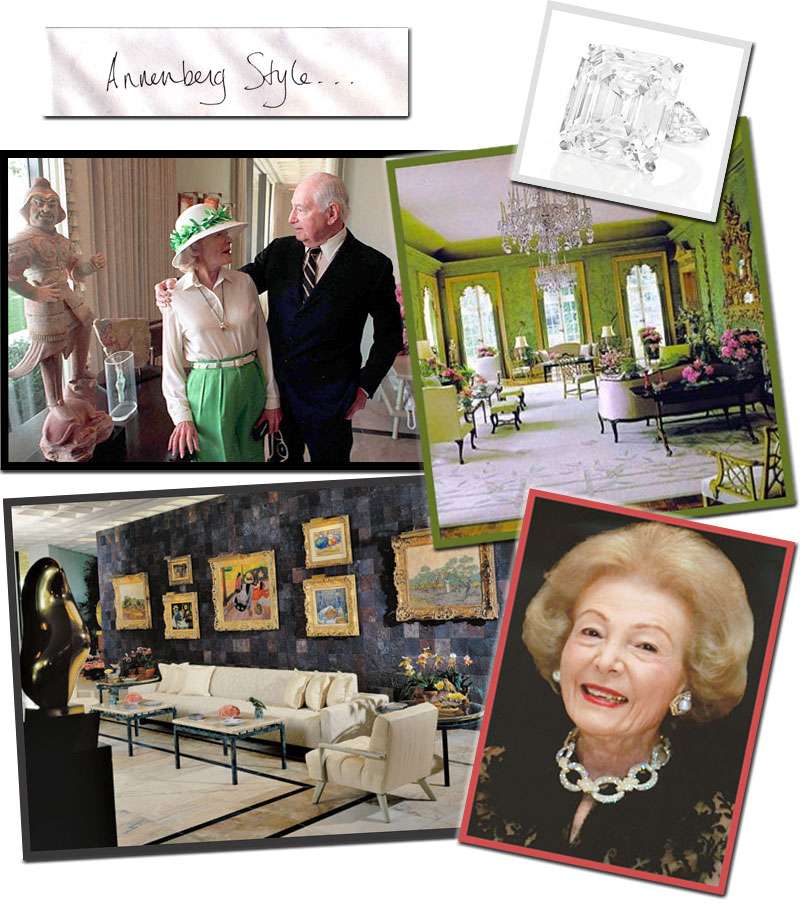
Why wait for a knight in shining armor to deposit a ring on your finger when you can get one for yourself? Just follow the lead of Leonore Annenberg (1918-2009), the billionaire philanthropist/ former Chief of Protocol and wife of businessman/ambassador to the UK, Walter Annenberg (1908-2002).

You've gotta love a 90 year old woman whose birthday gift to herself was... a 32 carat D-flawless diamond boulder.

The diamond went up for sale at Christie's two days ago (21st Oct), and sold for a record 7.7 million dollars to an anonymous buyer.

Above, Leonore Annenberg with her husband Walter, the 32 kt. diamond auctioned at Christie's, a green room from Annenberg's Winfield House, blue room from the Annenberg estate Rancho Mirage, California (image from Vanityfair.com).

Lee Annenberg on entertaining, from the New York Times piece on her:
The key ingredients are first of all to have interesting people...Then you try to put together an ambience of good food and attractive table settings. But all of that would be unimportant if you didn’t have interesting people.
Surprisingly, there aren't many images of the Annenberg residences floating about, but there is a book 
on the Rancho Mirage residence available for preorder, pub. on Nov 12 (Here: Sunnylands: Art and Architecture of the Annenberg Estate in Rancho Mirage, California).  Anyone hear anything about it? Preorder? Yes/no?

10.18.2009

A Desk Fit For A Princess

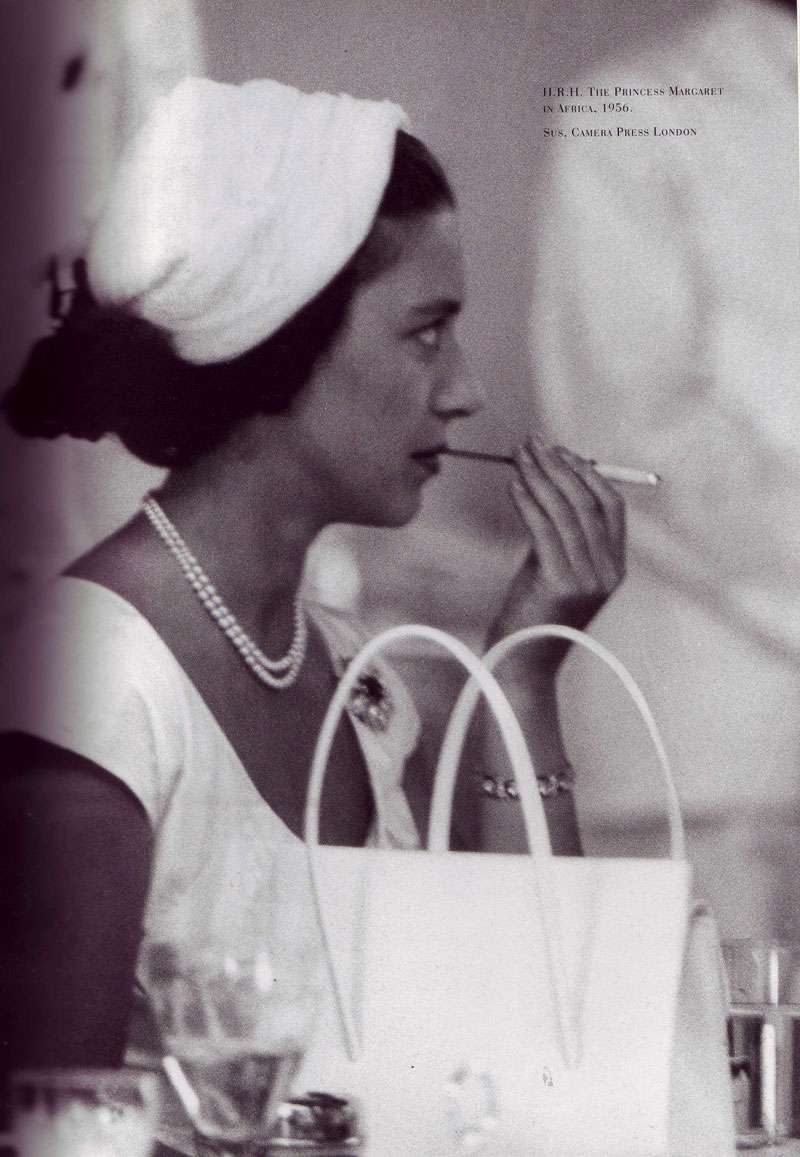
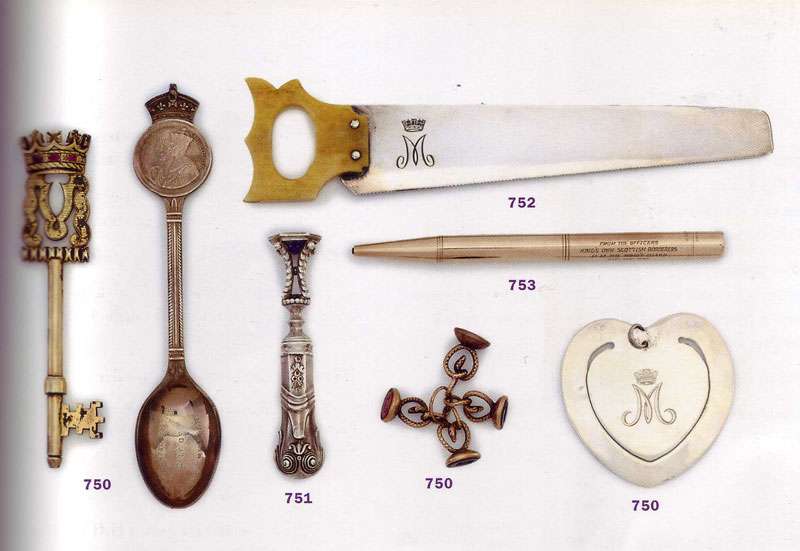
Princess Margaret (1930-2002), younger sister to Queen Elizabeth II, at her desk, Kensington Palace.  Amazing the things people keep on their desks, right? (Who knew the princess needed so much Kodak film?)


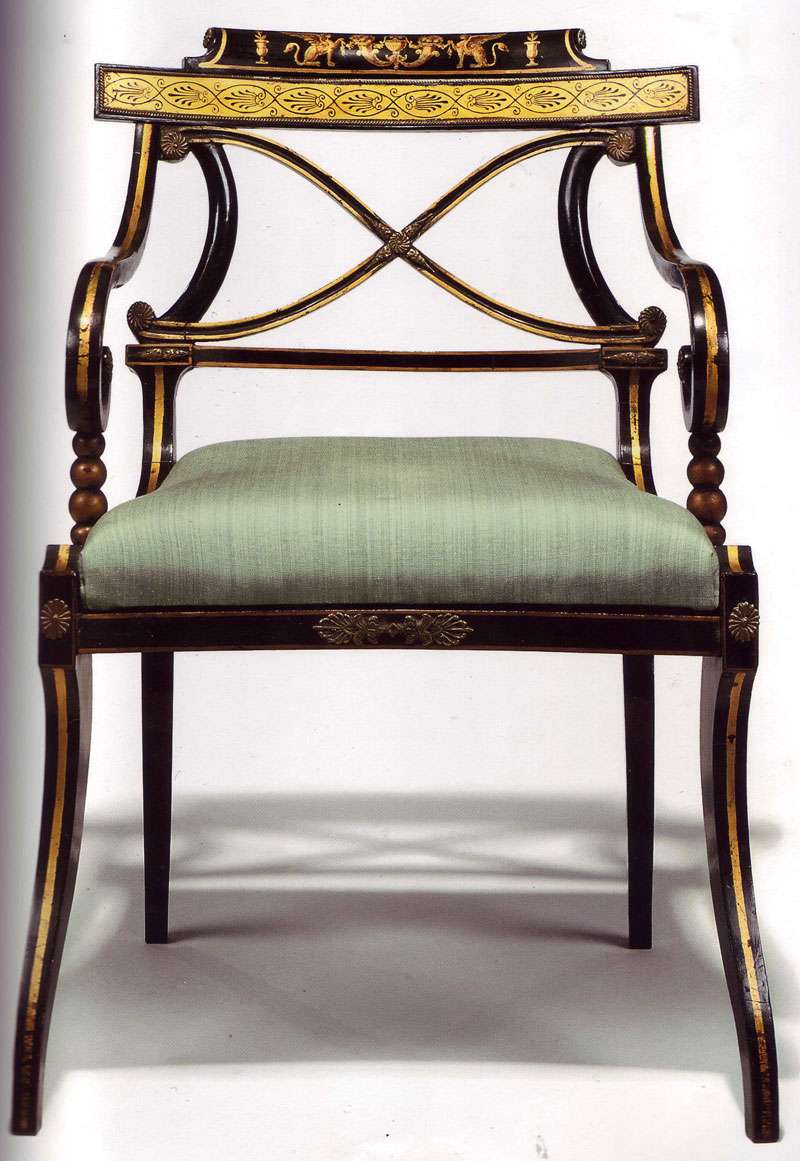
Some of the items from the Christie's auction of her estate...


Above, a Meissen three-tiered nine-light chandelier, c 1900 


Above, one of a pair of George IV black and gilt japanned 'klismos' open armchairs, c 1820, decorated in the late 19th century. 

Above, Various items owned by the princess, including a gilt metal key, silver hand-seal c. 19th century, silver-plate ivory miniature saw c. 19th century, and gold propelling pencil, 1947

10.16.2009

A Baroque Fascination

"Though the association of the Baroque with excess was well understood by the august Victorian and Edwardian(s), the rediscovery of the essential eccentricity and bizarre nature of the Baroque, and the recapturing of its all-but-forgotten whimsicality, has been a phenomenon of the modern era." - Stephen Calloway, in Baroque Baroque

Calloway's depiction of the Baroque is seductive, isn't it?  The Baroque is usually associated with pompous decoration and round, undulating flourishes affixed to grand-scale architecture.  I love (LOVE) Calloway's books because he probes beneath the surface and attempts to capture the essence of the Baroque.  What does he find? An era of experimentation, a state of flux.  Indecorous taste shifting into decorous taste, the gray space in between; you get the picture.  Surely, this is something I can relate to.

What I find so interesting is something he characterizes as a "baroque" fascination with the grotesque and unusual. From Baroque Baroque:
"In the history of taste there is a great fascination in the way in which things once despised are gradually found to have a certain curious charm.  Some continue to gain ground aesthetically, finally to enter the sacred canons of Good Taste."
 The word "baroque" was first used to describe rare, misshapen pearls that 16th and 17th century noblemen came to collect and treasure in their cabinets of curiosities. You know, those moments when something looks so bad, it could be good? Often the things I end up loving most are things I hated on first exposure. Now, I embrace that bizarre gut response when I'm lucky enough to encounter it.


Above, Virginia Bates's vision of shattered and decadent decay, from Divinely Decadent, by Stephen Calloway.
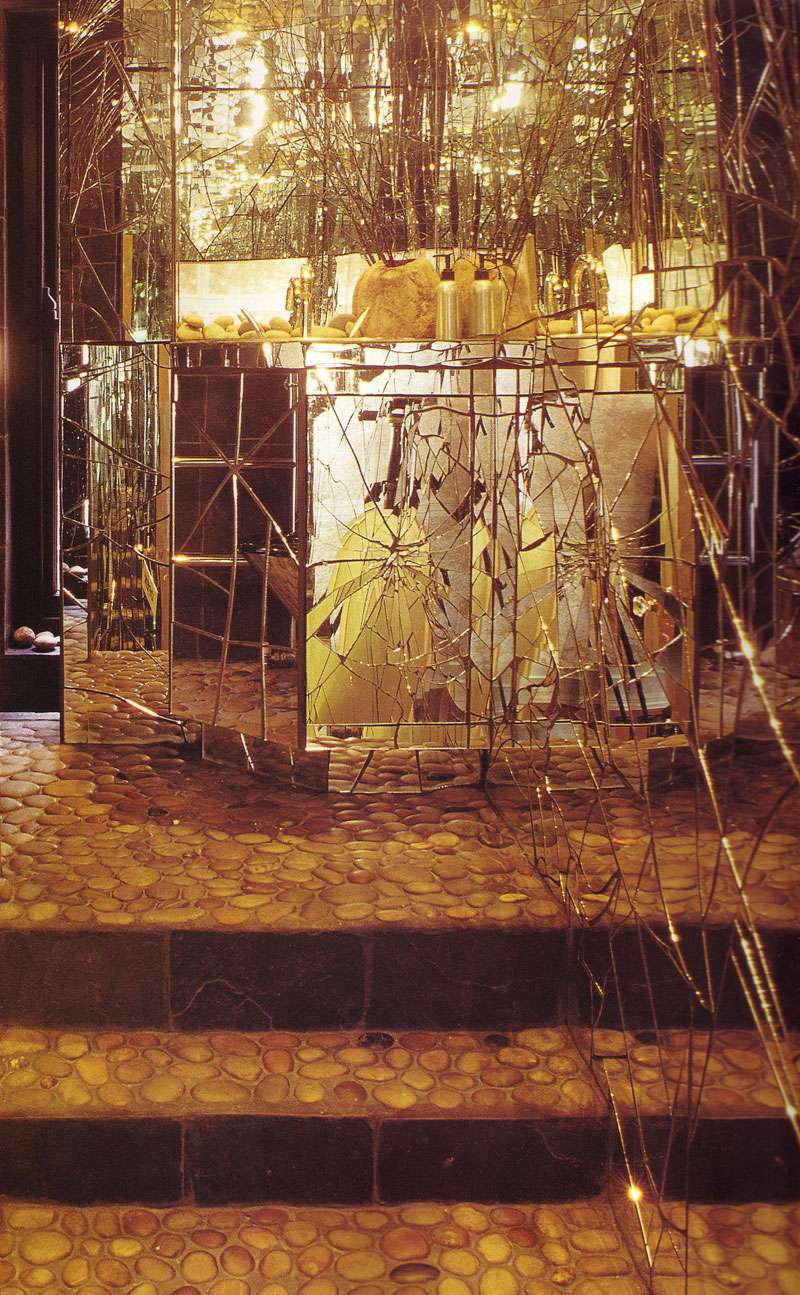


Above, Shattered mirrors in an interior by Carolyn Corben, from Divinely Decadent by Stephen Calloway


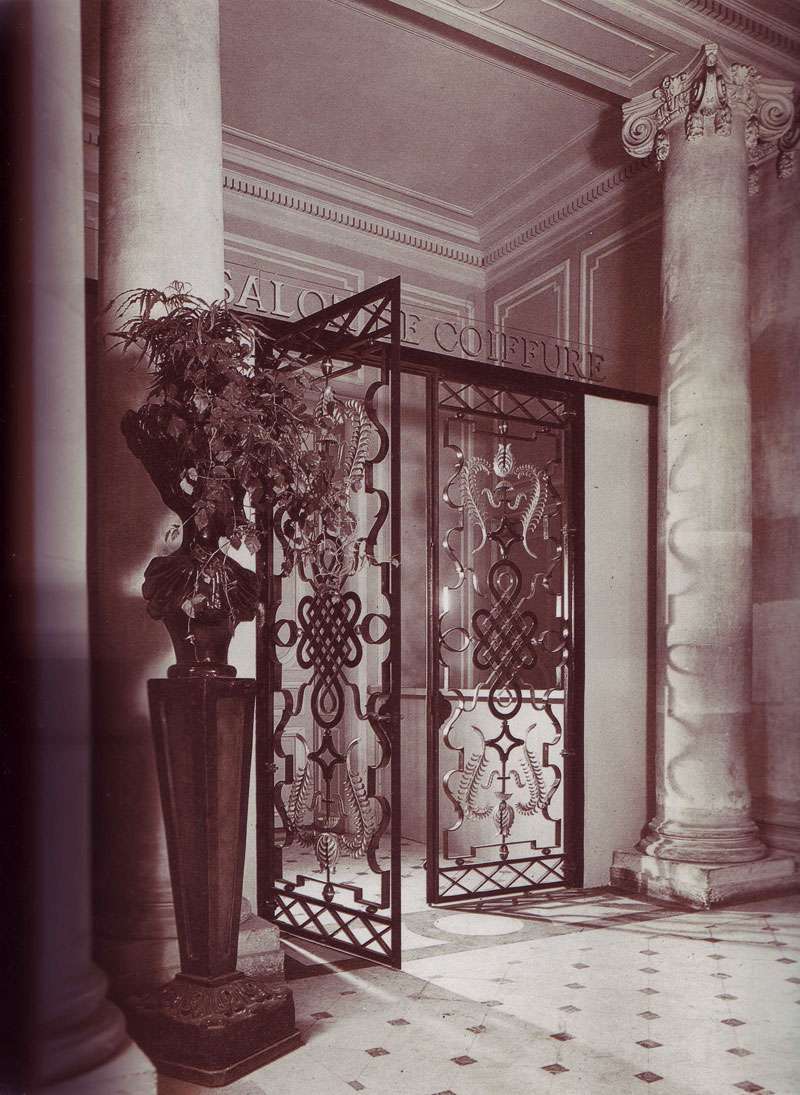
Above, Entrance gate at the Salon de Coiffure, Institut Harriet Hubbard Ayer et Alexandre de Paris, photograph c 1946 by Gilbert Poillerat, from Baroque Baroque by Stephen Calloway.


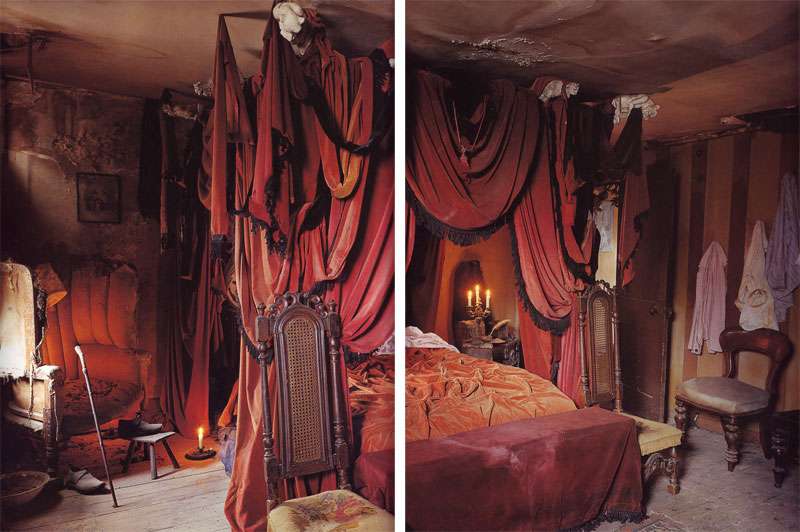
Above, an interior by Dennis Severs, inspired by Charles Dickens' Christmas ghost stories. From Divinely Decadent, by Stephen Calloway. 

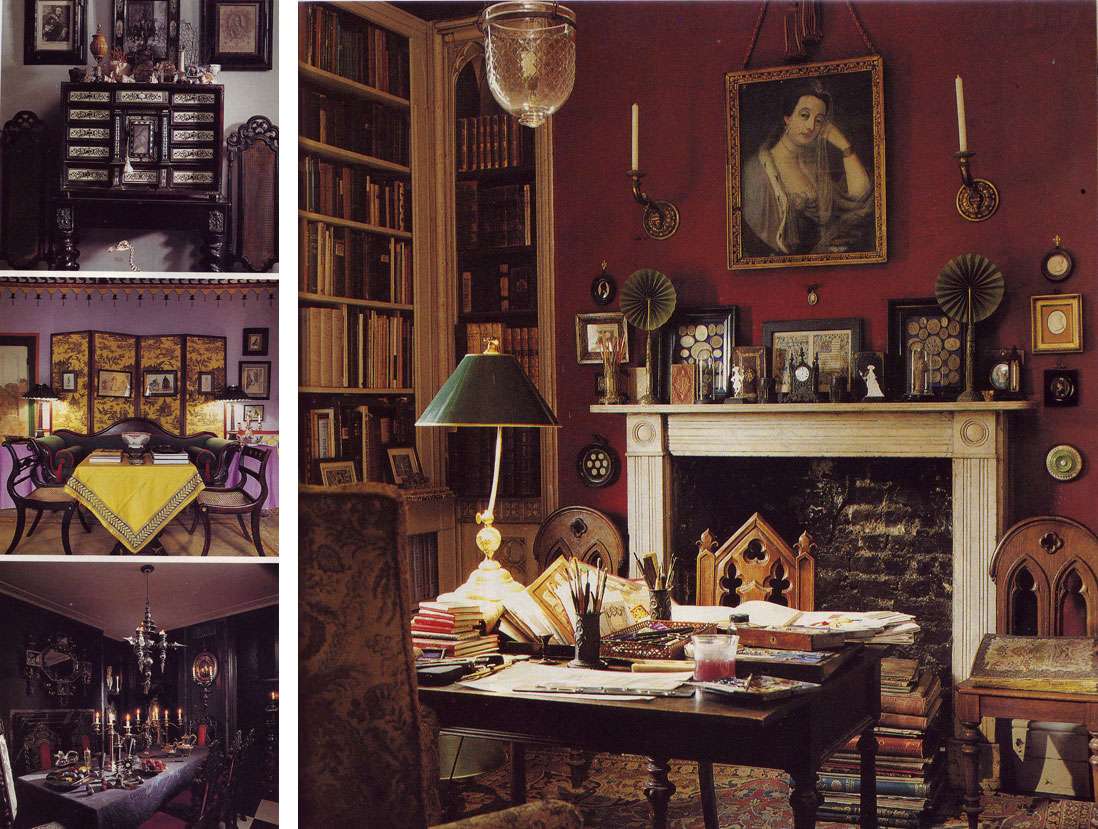
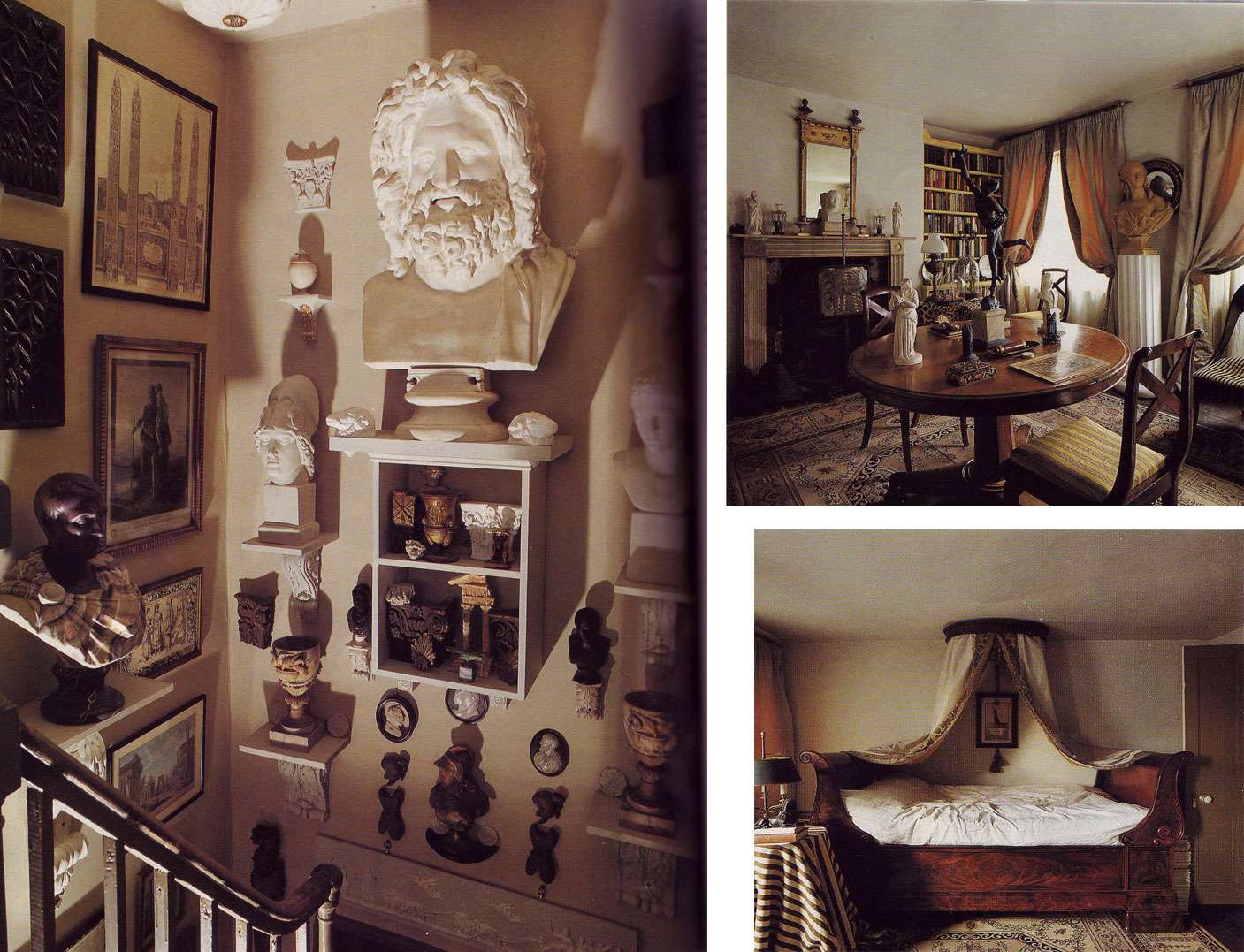
As I was perusing these jaw droppingly gorgeous images from Calloway's books, it suddenly dawned on me that I'd SEEN HIS RESIDENCE!!!!  These are the moments I giddily relish (it's like a behind-the-scenes peek- the man behind the curtain!)  Not surprisingly, the accompanying article was about using your living space as an experimental "taste laboratory."  I liked this idea, and so, I've scanned Calloway's apartment to share with you:


Above, Calloway and his wife, artist Oriel Harwood. From House and Garden, April 1991.

For me, this space isn't so much about perfection in taste (I don't necessarily even LIKE certain aspects of it), but it's not about that.  It's more about the excitement of seeing someone's vision and design journey; its an appreciation of the extremely personal nature of the apartment, even if it's almost too personal to love wholeheartedly unless you're the designer.


In other words, I'm intrigued. And appropriately so. After all, what could be more baroque than that?


Scans of Calloway's residence from House & Garden, April 1991.
Related Posts Plugin for WordPress, Blogger...